Showing posts sorted by date for query "Hunters Events". Sort by relevance Show all posts

Monday, 29 July 2024

The Festival Of Archaeology fortnight Has Come to an End, Leaving Questions Unanswered


In Britain they have this cutesy "#FestivalOfArchaeology" publicity stunt where all sorts of events are staged (some in the past involving "metal detecting" - ugh) anyway this year it lasted a fortnight. At the beginning there was an "ask an Archaeologists a question" session, the idea of this bit of public outreach being that members of the publlic could ask a real archaeologist a real question about real archaeology and they'd get an answer. Hmmm. Cute eh? Possibly they were catering just for the type of "what-do-you-do-when-it-rains?" or "do-you-find-much-gold?" type questions. Anyway since at the moment public archaeology is somewhat in competition with the Graham-Hancock-youTube "ancient lost civilization" take on the past (the popular Netflix series "Ancient Apocalypse" got a lot more viewers than anything actual archaeology has to show). I thought I'd see how British archaeology would cope with a Hancockian question or two. So here's one:
Paul Barford @PortantIssues ·Jul 19
#AskAnArchaeologist, What is being done in Britain to make available to the public the results of any current projects with relevance to the question of the existence of the possible Lost Ancient Proto-Civilization discussed in the popular Netflix docuseries #AncientApocalypse?
and the answer was revealing on just where public archaeology is going in Britain today....

I asked another one, a bit more specific, about the British evidence for that famed Younger Dryas Impact that you can read about in the Internet. I put a picture on this one, and the question is quite specific - and the answer would give the opportunity to explain a number of methodological issues (and the title's got "diamonds" in it):
Paul Barford @PortantIssues ·Jul 19
#AskAnArchaeologist, there is material claimed as representing a Younger Dryas Comet Impact (c. 12.9kya) at Watcombe Bottom, IoW, what is its archaeological context & is there more research in material of this nature in Britain? https://researchgate.net/publication/268390328_Nanodiamond-Rich_Layer_Across_Three_Continents_Consistent_with_Major_Cosmic_Impact_at_12800_Cal_BP 
So, whether or not Britain feels part of Europe any more, the whole of Britain and "Doggerland") are right in the centre of the shadow to the east of the effects of this claimed cosmic catastrophe - obviously something very significant to the prehistory and "story of our land", no?   So the answer to this question is pretty symptomatic too on the ability of British archaeologists to present to the public their side of a story that for at least part of the public that is fascinated by the mysteries of the past is part of popular culture... 

Just in case I was just a little too subtle above... despite the fact that thousands of people believe what they are told by the "experts" like Graham Hancock and his YouTube imitators that archaeologists "have got it wrong", "have not got a clue", or (worse) "are hiding from us all the truth", neither question was answered by a British archaeologist. As far as I know, there has not been any widely-accessible official response (such as a website or page on their own website) by any British archaeological body or organization to "Ancient Apocalypse". They've just capitulated to this widespread public misinformation about the past. the same with the Younger Dryas nonsense. It does not matter that there ARE technical articles in the internet in journals like Nature saying the reasons why there was no "impact", it's all there, but is it accessible to the average Joe Public. Will my Brexit-supporting Mum get anything out of it if she reads it? (Answer, no). 

Quite apart from the duty we have to inform public opinion (or am I dreadfully out of touch here?) there is a more important practical reason why archaeology should not be letting this slide. If tens of thousands of members of the public (that potentially includes developers, various shades of "influencers", local government officials as well as Westminster lawmakers) are firm in their belief that archaeology is a (deceitful) scam that cannot provide real answers, them why will they be persuaded to support our work in any way at all? 

After all, a bloke with a metal detector can find as many "treasures" as a fully funded dig done with little brushes and sieves that mostly finds only charred grains and potsherds the size of a thumbnail. A bus driver with a YouTube channel can show (and solve) more "mysteries of the past" (big stones "nobody knows how they were moved, pictures of ancient Egyptian lightbulbs, Sassanian pots that look like batteries, carvings on standing stones that look like aliens, etc.) that archaeologists who just talk about abstractions.... 

British archaeologists have surrendered long ago to the artefact hunters and collectors with their metal detectors and spades. Here too they also show their innate passivity. 

Please, show that you can answer the question. 


Friday, 3 May 2024

British Archaeology Fail: APPAG Cuddly Pink Unicorn Inquiry on Archaeology and Artefact-Hunting


APPAG Inquiry on Archaeology and Metal-detecting

Relations between archaeologists and the metal-detecting community have improved significantly over the last 25, especially with the establishment of the Portable Antiquities Scheme – a project to record archaeological finds made by the public in England and Wales – and reform of the Treasure Act 1996, covering England, Wales and Northern Ireland. Most archaeologists now recognise the value of detector finds for advancing knowledge, and recognise the contribution made by responsible metal-detecting for understanding Britain’s past. The UK has led the way in this regard, becoming a model for public finds recording schemes elsewhere in Europe. However, there is a recognition that more could be done to bring these communities closer together in the public interest, especially with more people than ever taking up hobby metal-detecting. As such, the aim of this inquiry is to see what can be done to support responsible metal-detecting in England (specifically) and promote the benefits of archaeologists and metal-detectorists working more closely together. We therefore welcome written submissions from anyone with responses to any or all the questions in the call for evidence by the deadline of 30 April 2024:

1). What are the main factors contributing to better relations between archaeologists (whether academic, commercial, community, museum-based, organisational etc) and metal-detectors users (both independent and within detecting organisations), and how could these be advanced further?

2). What is the role of hobby metal-detecting (as a research tool) in the context of advancing our understanding of the archaeology and history of Britain, and how does that link with professional and non-professional archaeology? How should access to metal-detected finds (especially those in private collections) be facilitated, for both the wider public and academic study?

3). What is the relationship between metal-detecting and other forms of community archaeology, and how could closer cooperation be encouraged?

4). How do we better promote responsible metal-detecting, and what are the roles of archaeological bodies, landowners, detecting organisations and those that organise events for detectorists, such as those organising detecting holidays and rallies?

5). How could archaeologists better facilitate the use of metal-detectorists (and the wider public) in archaeological projects, and what are the barriers to that? Might it be possible to develop and promote methodologies for systematic metal-detecting surveys?

6). How do archaeologists, metal-detectorists and others work together to better acknowledge best practice? What is the role of museums (for example) and other publicly funded bodies in highlighting the positive contribution of metal-detecting?

7). How have museums benefitted from detector finds, and how could mechanisms be improved to enable museums to acquire more public finds?

8). What should happen to archaeological finds found through metal-detecting not acquired by museums? How can metal-detectorists be encouraged and supported to document their collections and plan for when they can no longer look after them?

Total submissions should be no longer than 500 words and sent by email to APPAG@archaeologyuk.org.

Following the submission of written evidence, the committee will select representative parties to give oral evidence at the Houses of Parliament.

The committee will decide whether to accept a submission and whether to publish it – all written evidence will be considered by the committee (whether published or not). Once a submission is published it cannot be changed. Consider carefully how much personal information you share.
All pink unicorn stuff. Five hundred words is the length of their notice, so a rather dumbdown "inquiry". And all of the questions are loaded, the typical jobsworthy and conciliatory-defeatist claptrap that is all British archaeology can offer. Searching for the word "context", "methodoilogy" or "documentation", "ethics" or anything much else than mealy-mouthed fluff, then you'll see where this is going. Needless to say I did not bother. I wonder what the response was. | 

For the record: 
1). THE ACTUAL EVIDENCE is that there is no "better relations between artefact hunters/collectors" and archaeologists/ heritage professionals generally and it is head-in-sand bollocks to say there are. Look on the metal detecting forums and social media. Just look. 

2). WHEN YOU LOOK AT THE EVIDENCE (and if you can't be bothered yourself, there are also several recent papers by me "Alter Vikings", Medieval, Judaica - one on Bronze Age possibly coming up soon) hobby artefact hunting and collecting do not actually "advance our understanding of the archaeology". If you look objectively and as archaeology, the questions it asks and answers are simplistic and mostly based on Kossinnist dots on maps. Context is ignored,. That is NOT archaeology but antiquarianism. 

How it "links with professional archaeology" is that archaeologists get a supply of loose artefacts to write context-frei articles about without getting up off their butts

Metal detecting (artefact hunting and collecting) is NOT Archaeology any more than collecting costume Barbie dolls is ethnology.

3). Since artefact hunting, ripping loose archaeological finds from a more complex context, treating the latter as a quarry for collectables is NOT archaeology, it can't have any relationship with "other" archaeologies.  Loaded question - APPAG should define what archaeology is - just "digging up old things"? 

4). From the point of view of actively managing the erosion of the archaeological record by the various agences that are reducing it, it seems to me that the term "responsble artefact hunting and collecting" is an oxymoron, or at least has yet to be properly defined in Britain. The superficial and antedilluvian Code of Best Practice...,) hardly does that as it fails to cover issues such as targeting known sites, information collection strategies, and the dissemination of the record (finds) when a personal collection is dismantled.

- "detecting organisations and those that organise events for detectorists, such as those organising detecting holidays and rallies" [as the PAS already say; see also Heritage Action in 2017]  are NOT treating the archaeological record responsibly, they are using it up just to make some money for themselves. APPAG should define "responsible" first.  

5). Not only is it "possible to develop methodologies for systematic metal-detecting surveys" people are doing them (Rendlesham in GB, Grunwald here in Poland, work in Denmark). What are you "inquiring" about? Whether hobbyists can or will do them on their own initiative? Just read the forums and don't ask stupid questions. 

6). Is "highlighting the positive contribution of metal-detecting" what the emphasis should be on? what about highlighting for the better informnation of the wider public the damage done when it is done "wrong"? (again, what actually - from a resource conservation point of view - is that non-damaging "right" anyway? I do not see one, not in Greece, Turkey, Egypt, Afghanistan, Libya, Syria, Ukraine or the UK).

7). What pressures are put on museums by not curbing the way the archaeological record is being hoovered up and dumped in their glass cases without much site context?  When we have the National Museum of Wales deemed superfluous and closing - are these pressures that museums can cope with in this period of Britain's cultural decline? WOULD the National Museum of Wales be "saved' if some metal detectorist walked in with even the biggest ever Roman denarii hoard found in a Welsh field, twice as big as any ever known from the British Isles? Of course not, the problem lies elsewhere. 

8). "What should happen to archaeological finds found through metal-detecting not acquired by museums?" Should have thought about that before potentially 12.27mln of them have already been dug up and dispersed. I'd be interested in collecting here the references to all those conference papers delivered on this subject in Britain since 1996. 
 

Saturday, 10 June 2023

The Implications of UK Detectorists Being Urged, in Private, NOT to Report their Finds


On a metal detecting forum near you, but in the sections that are closed off from public scrutiny by those who want to hide the utterly irresponsible, selfish and oikish way its members write there about pocketing the common archaeological heritage...  they are banging on about - despite the position they affect in public - "why it’s unwise to report your metal detecting finds":

“There are obvious downsides to recording finds with the PAS. You need to ensure that you ask for the records to be confidential. However if you record too many finds from a particular Parish it soons flags up as an area of potential [..]. Finds recorded with the PAS are regularly passed onto the County Historic Environment Records for use in responding to planning permission or research. However they are also used to feed into application for agri-environment schemes to identify known archaeological sites for protection with a no detetecting clause. Now the field can continue to be ploughed and so on, but not detected on. PAS records of detector finds are used to identify finds scatters and so on, so by recording you are often shooting yourself in the foot so to speak.”
Gor-blimey, eh? Let us just go back two steps, first metal detecting can take place on sites on Entry Level Stewardship land that are not otherwise designated as scheduled monuments, or as Sites of Special Scientific Interest "providing searchers follow the Code of Practice for Responsible Metal Detecting in England and Wales", and that in the case of rallies, the authorities get 12 weeks notice of any large scale metal detecting events on Environmental Stewardship land. Metal detecting cannot take place on archaeological sites on holdings with Higher Level Stewardship agreements or Sites of Special Scientific Interest without the permission of Natural England. In any case existing agreements on the agri-environment scheme expire in 2024, so not long for greedy tekkies to wait now. But for now, the detectorist has no choice, if they search land included in one of these agri-environmental schemes, the farmer (ie the guy that takes public money to see that its conditions are followed) must ensure the finds are being recorded, the detectorist who pockets them has no option otherwise.

Secondly, let us note what the term "agri-environment scheme" denotes, it is about protecting the environmental reources of land in agricultural use, that includes the historical environment. In public, metal detectorists claim they want to help "protect the past". What they say behind the closed doors of their forums is often diametrically the opposite. It should be noted that if information is obtained, for example from reporting via the PAS, that an important and vulnerable site exists, that site should be protected from as much avoidable damage as possible. This is, in fact, one of the reasons why the PAS exists, to allow responsible detectorists to responsibly report what they are finding - precisely to use them as archaeology's "eyes on the ground" to elicit such information. If detectorists are being urdged not to report what they find, they no longer function as "partners" and we can just scrap the PAS, and spend the money somewhere else and deal with the artefact hunters and looters by other means.

Sunday, 19 February 2023

Letter to a Journalist [Updated]


After reading and then writing on a freelance journalist's efforts to discuss artefact hunting in the British context, the only reaction possible is, why British archaeologists do not react? Why do journalists keep writing this stuff? I can only draw one of two conclusions: either they read what archaeologists say, and tell them about the damage done by collection-driven exploitation of the archaeological record and for some reason are ignoring it (" 'oo needs so-called experts, eh?"), or perhaps British archaeologists simply aren't saying it.  I guess it is easy to complain that "others should do" something. So I set out to do it myself this time. Here's my letter to the journalist concerned below (anyone else care to share in the comments below what they wrote?):

Dear Ms Bosley,

As somebody concerned about the preservation of the historical environment and the values of is unique, irreplaceable, fragile and finite archaeological record, I was puzzled about the tone of your recent Birmingham Mail article about participation in a commercial artefact hunting event (I tried out metal detecting on a local farm and found something more precious than buried treasure). Would you advocate the same activities of a for-profit looting organization if it was enabling removing collectables(‘antiquities’) from ancient sites anywhere else in the world, Egypt, Iraq or Syria, for example? Or a historical shipwreck off the coast of Cornwall? Or stalactites from a cave high up in the Atlas Mountains? There is no difference. Is this a type of commerce that should gain public approval, or should it be called-out for what it is? In particular:

-       There is no mention in your text of the damage commercial rallies like this do, yet the information is out there only a mouse click away: Large scale metal-detecting events (rallies) can result in the loss of archaeological information and possible damage to archaeology. [https://finds.org.uk/getinvolved/guides/rallycode], See also: http://thepipeline.info/?s=detecting.

-        you do not mention  the 2017 Code of Best Practice for Responsible Metal Detecting in England and Wales [https://finds.org.uk/getinvolved/guides/codeofpractice  and https://youtu.be/bR4qwpN3TMw ], why?

-       still less, there is inexplicably no reference to public-funded Portable Antiquities Scheme (PAS) that records finds made by artefact hunters in order that the information about them and their findspots is not lost.  [https://finds.org.uk/about  and  https://finds.org.uk/getinvolved ]. Why?-       Neither does your article make reference to you actually determining the co-ordinates of the findspots of your own pocketed finds with a GPS or similar tool to then report them responsibly. Why? You took something away (from all of us, the history of that land is not yours alone), and did not think it important t replace it with even that snippet of information?

What however that article does is give a plug for the breed of irresponsible artefact hunters that make a commercial business of removing elements of the archaeological record for profit. They gain access to land with deposits containing archaeological and historical artefacts and make money by making them accessible to pay-to-dig artefact hunters randomly removing material often with minimal recording, damaging the archaeological record. The information about unwritten aspects of Britain’s past that lost through this activity is irreplaceable.

 In the last two decades or so, the number of metal detectorists pilfering the archaeological record for “cool things” to collect has risen from probably about 10,000 individuals to now 40,000 (figures from PAS). Collectively, figures suggest that they are currently removing over 1.2 million pieces of historical information annually from the archaeological record artefacts. Records exist of only a small proportion of those losses. In addition to being scattered in small personal collections, many tens of thousands of detected artefacts and coins end up annually on eBay and other online market places, fresh ones being sold there week after week, month after month. The archaeological record is clearly finite, and fragile. Many sites have already been all but stripped of anything of interest to collectors (and archaeologists). Huge areas of the historical landscape of the British Isles have been decimated by this activity, just as surely as the wild flowers and fauna have vanished from the same countryside in the same period. Gone.

 Alongside a great dose of official inaction, and lack of public awareness, irresponsible journalism that fails to depict the effects on the historical environment of this erosive and self-centred hobby for what they are and merely uses hobbyists’ “cool discoveries” as an easy source of a story is among the reasons why this problem is snowballing out of control.

 Yours sincerely

Paul Barford

It is not perfect, too long, but at least I tried. I've actually done these before, they are quite difficult to compose so as to get the main idea of a niche area of conservation (for that is what it is) over to a journalist who in real life covers hockey matches, the council not fixing the holes in a local road, why Brexit is bad for the cat food production industry, Suzie-What's-her-face's new "beach body" and woollen goods to gift aunties at Christmas (etc.). Also try and find archaeologist-written sources that a journalist "should have" consulted in researching such an article. Actually, there are three articulate articles on why rallies are a bad thing. One (Mark Bridge, a Times article) has inexplicably disappeared from the Internet, one (CBA magazine, Heyworth and Lewis) is not online, the third is full of Helsinki-hogwash and therefore does not get the point across that I am making. There is bugger all online (or in any public facing source that I can see) from archaeologists that explains the issue. WHY?? The same goes for commercial firms organizing rallies and metal detecting holidays. Find me an online or public-facing source written from an archaeological point of view explaining why they are bad (or even discssing whether or not they are bad). Yes, there's the Barford Blog, but I did not want to cite only my own material, there's a bit in Andy Brockman's Pipeline, Heritage Action blog... and... again, bugger all for the British public to read about the issues. Looking on the PAS blog for anything much about anything like this is simply a waste of time. WHY??

"Oh, we don't have time" is no doubt what they'll all whine. Offer them a spot on TV pandering to metal detectorists and mouthing a few scripted platitudes to halfwit 'celebrity' presenters and they'll find the time to spend three days in a field waiting to go on camera. But writing to an underinformed journalist, or writing public-facing materials to present artefact collecting and the antiquities trade more holistically (or even critically), well, that's something that most of them apparently think "somebody else" can do.

Updated 5th March 2023

For the record, journalist Ms Kirsty Bosley did not bother to even acknowledge receipt, let alone engage with anything I had spent time putting forward for her.  That British media are in the hands of journalists who write about things they know very little about, cannot be bothered to research first for context,  and zero people skills is clear. That does not absolve archaeologists and those concerned about environmental issues simply shrugging their shoulders. 

This is what happens to the "green and pleasant land" they all take for granted when everybody shrugs their shoulders and fail to react. Roadside litter - stuff just thrown out of car windows and left lying there, is now the UK's calling card for visitors. All over rural Britain, the underground heritage is being looted away for the selfish greed of those that live among this overground squalor. 


Friday, 26 August 2022

Nightime Filming, Inadequate Consultation and Lack of Direction: How not to Make an "Archaeology" Show


Nightime meetings in fields (still from trailer)

I enjoyed the Review: "Digging for Treasure- Tonight Daisybeck Studios for Channel 5" ( by thePipeLine August 27, 2022), in which the tent featured in the show expresses their feelings and doubts about this way archaeology was presented in this weirdly-named show (apparently the first of four episodes). Apparently they were less than enthusiastic about yet another metal detecting show as all of the ones that have been produced over the past few years by "various production companies and networks [attempt] to give metal detecting a gameshow makeover and none of the formats get beyond the “Whoopee we’ve found some stuff” level. And as for Henry Cole blowing his own bloody horn…”... It seems the writer concluded that this one was no different from the rest. More worryingly, "the Portable Antiquities Scheme was involved in designing it, well eventually it was, and as well [...] Raksha Dave, President of the Council for British Archaeology is the third presenter”. The comment was made that, as was already clear from the trailer and the show's actual title, "Digging up Treasure Tonight", a lot of the scenes were shot in twilight or at night ("In fact there is a really good bit where Michaela gets taught to metal detect while an assistant producer points an LED Softlight at her. The shadows and dark blue sky are stunning”. This is pretty disturbing. There are a whole number of people who go metal detecting in such lighting conditions when they cannot see what they are doing as they disturb the archaeological context of the finds they hoik out, but (more importanly for them), they themselves cannot be seen to be on the site taking things. Two generations of artefact hunters have been trying to get public and professional acknowledgement that these "nighthawks" are not bona fide "history hunters/ heritage heroes" like them, but the ones authorities should be going after. The very opposition "nighthawk/ not a nighthawk" is taken in many circles as the basis for any definition of "responsible detecting". Whatever that means, I have yet to see the promised "guidance" (but here are my thoughts on the matter [navigate from here, format a bit bonkers at the end]). I wonder if it mentions not going out at night so you can see what you are doing?

It's worth noting that this same presenter is also depicted wearing a top emblazoned with the slogan "Just Keep Digging" and shows two excavation tools, a barbeque fork and a garden trowel. Pretty pathetic that they can't even get that right. It's not rocket science - especially in a programme that claims they are in close contact with so many "experts" - none of them presumably were shown this shirt in the pre-production meetings (or perhaps they were, British archaeologists are characterised by passivity and an inability to speak out the moment the phrase "metal detector" is involved).

The programme also discusses metal detecting on the site of a crashed WW2 Lancaster bomber with "some nice artefacts from Lancaster E105 for Dan Walker to show the punters, including parts of the parachute from the crewman who was killed”... Er... The writer points out that the obligations of the PAS/CBA to do archaeological outreach and give "guidance" in any such programme on the legalities of artefact hunting and collection would involve mentioning that to be legal the searcher would have to obtain a licence from the Ministry of Defence under the Protection of Military Remains Act to recover artefacts from a crashed military aircraft.

Likewise in the show there is a feature involving tekkies from all over the British Isles ("come and join us, get diggy with it!"), one of them is from Northern Ireland (Ballinamallard metal detectorist to feature on new Channel 5 show Impartial Reporter 25th August):
“I do metal detecting and I have a YouTube channel with it; it’s only a small thing but this person from the production team messaged me and said they were doing a TV show, and wanted to get a couple of people from around the country to do a wee feature for them, and if I would be interested? [...] Noting that he only recorded the clip last week, Daniel explained that he was told that the show has a “pretty quick turnaround”.[...] Inspired by the TV show ‘The Detectorists’ starring Toby Jones and Mackenzie Crook, Daniel took up metal detecting four years ago. “I watched The Detectorists and thought, ‘That looks like fun’. I love history, so I thought I’d give it a go and sure enough it stuck,” he said [...] When metal detecting in his local area, Daniel noted that it’s very important that he asks for permission from the land owner [...] – that’s the only way you can do it, legally. You get farmers’ permissions and then you go out in their field, and if you find something worth anything, it’s a 50-50 split, 50 per cent to the farmer and 50 per cent to the detectorist,” explained Daniel.[...] He went on to explain that for the feature in the upcoming TV show, he filmed himself metal detecting in his father-in-law’s field in Ballinamallard. “[In the clip] I had to say who I was, where I’m from, how long I’ve been doing it for, and then a piece of me going into the field and hopefully finding something. “Sure enough, I found a coin when I was doing it,” Daniel told The Impartial Reporter.
This quote is important, as it shows how the production company went about finding participants (ie not going through the archaeological authorities dealing with "responsble artefact hunters") and also the effects of TV programmes like this in encouraging people to go out and dig up archaeological sites and assemblages. Note the very prominent lack in that statement of how to go out and legally search for historical and archaeological objects, no matter who owns the land, the need for a permit under Article 41 of Northern Ireland's established Historic Monuments and Archaeological Objects (NI) Order, and to surrender the artefacts before discussing any "50:50 split" (thought it was NOT about the money). Showing hole-digging in Ballinamallard would require the programme presenters to present that NI legislation, and point out in detail how the legislation on artefact hunting and collecting varies across the United Kingdom. [UPDATE: Overnight a brief Channel 5 tweet associated with the programme does indeed set out the situation in Northern Ireland. There is a similar set for England and wales. Scotland apparently is too far from London to count].

The reviewer's feeling was that in Digging for Treasure- Tonight 
“the “as live” format is all over the place and that they have thrown every method of discovering historical stuff at the TV wall to see which one’s stick, probably because they haven’t had time to work out if they want the show to be Henry Cole or Alice Roberts".
There are also a few first reactions from social media:
TheGorgeousFluffpot @GorgeousFlufpot · 9 g.
W odpowiedzi do @dfttc5 @mrdanwalker i 2 innych użytkowników
This had the potential to be a really interesting programme but ended up being more like a children's daytime programme with all the clapping. Please keep it serious, there was so much more that could have been said but was lost in the presenters' hysteria
linda nixon @lindanixon2 · 9 g.
Way too much clapping ! Here's Dan .. applause ..stop !!
Isla Keys💙🏴󠁧󠁢󠁳󠁣󠁴󠁿 🇺🇦 @KeysIsla · 9 g.
Why sensationalise? No need for all the clapping and cheering. Real turn off.
kenndo nagasaki @NagasakiKenndo · 9 g.
Yeah.... totally agree. Terrible choice of presenters. Over reaction is cringeworthy. In my opinion, Raksha Dave was the only person needed as a presenter, not an ex-news presenter with obviously no interest in detecting. Michaela Strachan pretending to detect.. Terrible
1952Female @1952Female · 10 g.
W odpowiedzi do @dfttc5 @mrdanwalker i 2 innych użytkowników
Detectorist finds a Roman coin but Michaela grabs it and touches it before he does 🙄
Concerning the "detectorists", one would hope that Mr Pickering's Northern Detecting Events were not chosen randomly, but because of their proven track record in "responsible detecting". In which case, why did the programme producers think it was necessary to have a "talking head" from outside the group to lecture them (and the viewer) on the "regulations" and methods they employ?
Marisa @MarisaRanieri3 · 13 g.
W odpowiedzi do @mrdanwalker @channel5_tv i 3 innych użytkowników
I have had a keen interest in Archaeology and Ancient History, my entire life and was so looking forward to Digging for Treasure. The facile content and unnecessary clapping when you entered the tent and the patronising vocabulary directed at the viewer...made me switch off.
sue kempson @StokieSueK · 11 g.
I enjoyed seeing all the finds but the whooping & the clapping not so much.
Time for tea @4pmtimefortea · 11 g.
Completely confused by all the clapping and cheering. Why is that happening? #DiggingForTreasure
myfatherwasatoolmaker @Jimmyja80049358 · 12 g.
W odpowiedzi do @mrdanwalker @channel5_tv i 3 innych użytkowników
Shockingly bad TV. Where is Tony Robinson?
Admittedly there were some positive comments, mostly from what one might call the 'Gor-blimey' crowd ("Brilliant Dan, loved the show.."; "absolutely awesome"; " Really enjoying the show so far @mrdanwalker - the things you get up to!"; "Genuinely gutted you didn’t get your say on the show name. “Getting diggy with it” is genius").
And British archaeologists, asked if they wanted to participate in this extravaganza, and after having asked the right questions to find out how it was structured and what the underlying ideas were, decided to lend their names and those of the institutions they represent, plus their expertise to this venture thinking this would somehow benefit British archaeology and protect the archaeological record from erosion by collectors. Yes? "Getting Diggy With It, Just Keep Digging... JUST AS LONG AS YOU KNOW WHERE TO LOOK".
 

Thursday, 14 July 2022

More on Rallies From Wessman, Deckers, Lewis, Thomas and Nolet


Above I offered a few preliminary comments on a text on "Advances in Archaeological Practice" written by Anna Wessman, Pieterjan Deckers, Michael Lewis, Suzie Thomas and Katelijne Nolet ("Metal-Detecting Rallies: Characterizing the Phenomenon, Understanding the Challenges, and Identifying Strategies for Heritage Protection"). 

In it, the authors almost come to the obvious conclusion, that the best way to deal with the issues is that "large-scale group events are regulated through legislation", but of course shy away from coming right out and saying it:

"[if we don't do this] it is essential that archaeologists and policy makers continue to promote stewardship among detecting communities and begin to educate organizers to ensure better practices and to mitigate archaeological damage.

["begin", eh? PMB] They go on:

We advocate an approach where archaeologists, working with the detecting community, encourage organizers and individuals to take more responsibility for what happens at these events. If organized well, it is even possible that attendees will get more enjoyment, knowing that they are creating knowledge rather than depriving others (not just archaeologists) of it. This approach is not without challenges, but we hope that detectorists are keener to be acknowledged for the benefits their hobby—if practiced responsibly—can add to knowledge than be ostracized for damaging it.[...]

Competing Interests

The authors declare none. [...]

Well actually they should, shouldn't they? Because their interest is in promoting that nice simple "Suzie and Bonnie" view of the "responsive" artefact hunters who just need a bit of head-patting to make into ardent avocational archaeologists. You see this glib assumption running right through this article. This comes from the Tony Gregory/Denison-Dobinson days, three decades ago when detectors had only just stopped running on steam power, and it seems rarely has it been questioned. Most archaeologists never go deeper into what tekkies write on their forums when they think nobody is looking. And it shows. Here it shows. 

What is notable is that in proposing ideas about the detecting community and affecting the detecting community, the authors did NOT ask any metal detectorists from the three case study areas to be co-authors, or even read through and comment on a draft. Why were the authors not curious as to the reactions of the "responsible and responsive" metal detectorists they insist are out there just waiting for some archies to descend from their ivory tower, to graciously tell them how they "will get more enjoyment, knowing that they are creating knowledge rather than depriving others (not just archaeologists) of it" and why they should be "keener to be acknowledged for the benefits their hobby can add to knowledge"? Are they not curious [courageous enough] to see what reaction a draft of this text would get on a forum asking members for comments. Why? This directly affects detectorists does it not?


Friday, 15 April 2022

Antiquities in Wartime: eBay and the Ukrainian Antiquities Sellers [Updated]


            That's probably the remains of a             
  looted cremation cemetery (eBay.com)

eBay has long been a place where Ukrainian artefact hunters, fakers and middlemen have sold their goods. For example if you are looking for "Viking" artefacts, a Ukrainian seller has something for you, here 1100+ items in one section alone just today. No matter that some of these items are not even Early Medieval Scandinavian in type at all (sometimes far from it) but many are clearly outright fakes. Or perhaps Scythian is your thing... There are 35 dugup artefacts on sale just today, among the books and tat. In a situation where you might be one of those odd people that is interested in collecting "Medieval"... then they have a range of "Kievan Rus" material for you - 509 items just today. Their definition of Kievan Rus is a little off, since a lot of this region was technically "under the Tatar Yoke" (the 'Golden Horde') from 1228 to 1480, part of Ruthenia (1250-1350) and then under Lithuanian and Polish-Lithuanian rule before later becoming part of Muscovy under Aleksy I Michajłowicz​ and later Tsars (interesting article on Russia's 'Gathering of the Lands' here). You can also buy considerable quantities of all sorts of dugup WW1 and WW2 militaria from Ukrainian sellers.

The picture is of some "9 pcs ROMAN Empire or VIKING Fibula Brooch BRONZE Fibulae UKRAINE Part Fragment", current bid: US $0.06 [ 2 bids ] Free shipping ("This package may be delayed due to shipping carrier service disruptions"). These are being sold, along with 965 other dugups trinkets and other items by seller " thebestfromukraine (4628)" [2.0K Followers 99.9% Positive feedback 17K Items sold since Jul 06, 2016; "Top-rated seller: One of eBay's most reputable sellers".] who boldly gives their location as: "Europe, Ukraine". They boast:

I live in Ukraine, Eastern Europe. The territory is rich in historical events, each era left its own unique and wonderful artifacts. At different times this territory was the property of the countries: the Austro-Hungarian Empire, Poland, the Russian Empire, Romania, USSR and others. During frequent wars, the territories were occupied by German, Russian, Polish, cheh, Romanian, Hungarian, and Austrian troops.
There are a lot of historical items left from different people that you can see in my store.
Many people buy such items to create their installations and decor.
Not only will these things beautify your home or office, they can be a great addition to your collection or museum exhibit. Buying antique items is the best investment that is independent!
Where else will you find such interesting items as not in my store?
Adding:
From my city to the fighting battlefields - 600 kilometers, so I can still work. On the first day of the war, Russia bombed my city ... :( Ukrainian Post work export now, - delivers packages to Europe - from there they will fly to you. It will take longer. I hope for understanding and help! Bid & win!
From the mention of bombing and Romanians, I am going to guess that this "city" might be Odessa or perhaps Bilhorod-Dnistrovskyi. So some people are fighting and dying for theior country, while others profit from selling off its heritage. Not all buyers see this (comment by "m***d" in the US (?)) in the past month:
"We just received a large order of the most incredible antiques from this shop, packaged with the most delicate of care, and we witnessed history as we unraveled the gorgeous items - and the seller did all of this while in an active war zone! We feel absolutely honored to be holding a piece of history from a corner of the world fighting for their freedom. Thank you, thebestfromukraine, for your commitment to preserving history during a tumultuous period in your country - Glory to Ukraine!"
The objects bought included dugup WW1 and WW2 militaria including [iron] "cross(es)" for US $376.83. This seller has a lot of WW1 and WW2 dugups. 


Update April 16th 2022:
How much is worth the trashing of archaeological context and an archaeological site in a war zone and region where cultural genocide is being actively pursued? 

"Bidding Ended: Apr 16, 2022 , 5:59AM
Winning bid: US $1.25 [3 bids ]"

There's something else I would draw attention to. These fibulae are photographed in a way most people would say is "upside down", for generations, at least Almgren on, we've been accustomed to seeing fibulae pictured with the spring at the top and the catchplate at the bottom, in book after book, and museum display after display. That's the antiquarian way of looking at them, when people were less bothered about context (it also makes sense, if the pin becomes undone, the fibula stays in the fabric). But when we excavate graves more carefully (ie not with a metal detector and a spade) we find that over most of the Roman world and at most times they were in fact worn with the (heavier) spring pointing down. But our Ukrainian dealer shows them like that, suggesting they know more than average. And yet they write "Roman Empite or Viking" which is just noonsense. They are never in a million years anything "Viking"... as for whether they came from the Empire or not, they look more like Wielbark ones to me (but I have an aversion to Central European fibulologists and fibulology, as I do to metal detectorists, so don't quote me on that). This misattribution is presumably to make them more saleable. 


Saturday, 1 January 2022

Portable Antiquities Collectors Won't Look Up


Don't Look Up


Two Warsaw members of the Barford family spent this New Year in isolation from wider contacts with a bottle of Ukrainian "champagne" (solidarity with our country's neighbours) and a chicken and cheese pie. We decided to watch the film "Don't Look Up" (USA 2021). As many readers will know, it is a satirical science fiction story centred around science denial by media, the 'establishment' and politicians - of course the real story behind it is a metaphor for government, media (and thus ultimately public) indifference to the climate crisis and the way the public as a whole is rendered complacent and complicit through accepting misinformation at face value. Before watching it I'd read a number of reviews - mostly fairly hostile, so was not expecting much. I must say I really liked it, but was at the same time repulsed and disturbed by it. I found it quite thought-provoking, both in general as well as personally.

The story (spoilers here: Netflix, Wikipedia, IMDb) is multilayered, and looking closer behind its seeming simplicity and in-your-face brashness, it turns out there is a lot of clever writing and innuendo. The message about the dangers of our current state of prevalent anti-intellectualism could not be clearer. It is here the film spoke to me. In the telling caricature, the whistle blower astronomers at first celebrate their 'discovery' a new comet, but when they realise the significance of its trajectory they are frustrated in their attempts to get effective action taken. The media treat a serious issue as just part of their usual fare of marginal trivia, politicians think only of their popularity ratings and are afraid to take action, while a third option (big tech symbolised by the ultra-creepy, meek-voiced billionaire Peter Isherwell amazingly played by Mark Rylance) comfortingly reassures that "everything's fine" while at the same time avoiding eye contact (ie looking the facts in the face). Spoiler alert, everyone dies in the end.

This was very close to home for me. Together with a few other folk (Nigel Swift, Sam Hardy and others), we have been trying for some two decades or more to get across to a wider public the issue of the massive damage being done to the historical record by artefact hunting and collecting. I am not for a moment suggesting that this is a problem anything near the magnitude of a planet-killer comet or global climate change, but I hope we can agree that neither is this an issue of totally negligible importance for humanity. Yet, like the whistleblower comet-spotters of the film, the media, the establishment and the politicians not only could not give a tinkers, but actively deflect discussion away from the crux of the issue to some supposed benefits. The media fail to attempt to see beyond the same few easy marginal trivia and tropes that they always use. The PAS and dealer's lobby groups have been 100% in Isherwell mode for over two decades. Governments say the remains of our ancient past are important and they are determined to protect them , but don't (and even see "opportunities" provided by its destruction by artefact hunters). These are the ones urging the public "don't look up" to see the reality but encouraging them to focus instead on their soothing narratives and science denial.

This, I think, is a narrative that is already familiar to many campaigners. Two things about this film that are notable also have their parallels in the fight against damage caused by collection-driven exploitation of the archaeological record.

The first is "where are the other scientists?". The storyline is that only two scientists are urging action be taken, and presenting convincing and verifiable evidence that the situation is dire and requires a remedy. the rest are sitting back and watching from the sidelines. That may in part be a desire on the part of the writer to keep the story simple, but it is what is happening. How many of the world's tens of thousands of scientists are actively campaigning against climate warming (how many can you name without looking it up?). How many of even the UK's c.6000 archaeologists about "metal detecting"? Where are these people? In the film, in the end one of the comet-spotters decides to work "with" the establishment, ultimately realising (too late) that this is not the way to influence events.

The second attribute of the film is the assumption that "the world" actually consists of the USA. This is a pretty typical 'given' of US mass culture of course. Here though it is what the Americans do or don't do, by themselves that decide the direction of future events that affect the entire planet (China is depicted just as a passive watcher). The fictional problem of the film plot, like the collection and commerce in antiquities, is one that requires international collaboration. This concerns not just action against culture thieves across national borders, but actually establishing what it is we are faced with and fighting... a task that is not easy given that two major market/collecting countries (UK and USA) have laws and conceptions that not only differ from each other, but also the majority of other countries in the world. And we try to pin the whole thing together under a UNESCO Convention 50 years old, referring to the market of the 1960s, that is not actually about looting at all.

I do wonder however about the point of it all. The film raises a number of questions. The main one seems to be "what can we do about this"? A realistic answer to that escapes me. It seems that in the end, all some of us are left with is the sentiment expressed near the end of the film when Dr Mindy and his family and friends sit out the end of the world, and Dibiasky says "I'm grateful we tried".  

Update 5th Jan 2022
Several interesting reviews:

George Monbiot, 'Watching Don’t Look Up made me see my whole life of campaigning flash before me' Guardian Tue 4 Jan 2022

"No wonder journalists have slated it. They’ve produced a hundred excuses not to watch the climate breakdown satire Don’t Look Up: it’s “blunt”, it’s “shrill”, it’s “smug”. But they will not name the real problem: it’s about them. The movie is, in my view, a powerful demolition of the grotesque failures of public life. And the sector whose failures are most brutally exposed is the media".

Branco Marcetic, ‘Don’t Look Up’ and the Maddening Reality of the Climate Crisis', Science 5th Jan 2022. 

Rebecca Oppenheimer, 'Hollywood Can Take On Science Denial; Don’t Look Up Is a Great Example' Scientific American   December 30, 2021 [though I think she focuses on the comet and misses the main point]. 

Donna Lu  ‘It parodies our inaction’: Don’t Look Up, an allegory of the climate crisis, lauded by activists Guardian 30 Dec 2021. 

David Vetter, 'Why Sneering Critics Dislike Netflix’s ‘Don’t Look Up,’ But Climate Scientists Love It', Forbes Dec 28, 2021. 

Rain Jordan, 'Environmental Activists Praises Adam McKay's 'Don't Look Up' Saying "It's an Allegory for the Climate Crisis", Nature World News Dec 30, 2021 ["I've heard from a lot of activists who say that after seeing the video, they felt heard and recognized"]. 

John Leo C. Algo, ' ‘Don’t Look Up’: A film review by a climate advocate', Rappler Jan 4th 2022.


Update Updated

"Rarely has a film been as divisive as Adam McKay’s climate satire Don’t Look Up. Although it has been watched by millions, and is already Netflix’s third most watched film ever, the response from critics was largely negative.[...] We asked four climate experts to give their views on the film":
Ketan Joshi, Fiona Harvey, Nina Lakhani and Damian Carrington, 'Don’t Look Up: four climate experts on the polarising disaster film' Guardian Sat 8 Jan 2022

the movie has been panned by many critics, with the main charge being that it is heavy-handed, blunt and too obvious. But that is exactly the point.
I'd really like to hear Greta Thunberg's response.

Also, despite many critics suggesting the film is heavy-handed, one notices the plethora of texts appearing on the Internet of the " 'Don't Look Up' ending explained" ilk. Dozens of them, which reveals something about the audience, I guess.

Wednesday, 10 November 2021

Entanglement: The Use of HER Data for Commercial Artefact Hunting in the UK


Where do UK archaeologists that support artefact hunters imagine many metal detecting books suggest searchers look to find new “productive” sites? Funnily enough, the targeting of known sites, harvesting the fruits of archaeologists' fieldwork, is not a topic that is even touched upon in the wishy-wasky Code of best Practice for Responsible Metal Detecting in England and Wales. A recent story highlights this issue (Pipeline, 'Council Acts After Accusations Metal Detecting Company Used HER Data to Target Archaeology' November 8, 2021):

Following thePipeLine’s recent story suggesting that leading metal detecting rally company, Sovereign Metal Detecting might have used data from the county Historic Environment Record [HER] for Shropshire to target known archaeological sites for pay to detect rallies, Shropshire Council has confirmed that it has taken steps to limit the location data available to users of the on-line version of the county HER. [...] “Clearly the council is concerned that HER information is being used by the organisers of metal detecting rallies who do not co-operate with the Portable Antiquities Scheme, and we have therefore now taken steps to reduce the location information available via the Discovering Shropshire’s History online version of the HER [...] However, the restriction of access to HER records needs to be balanced against the requirements to make the HER a publicly accessible resource [...] [HERs] were never designed to [...] facilitate metal detectorists in finding locations to search, let alone provide locations for mass participation events where tens, or even hundreds, of detectorists pay to dig, and are under no obligation to report any finds to the HER, except those falling under the remit of the Treasure Act 1996. [...] [N]obody from Sovereign Metal Detecting had contacted the Shropshire county archaeology team in advance of the rally. Neither had Sovereign Metal Detecting paid for any searches of the HER, which is normal practice in searches related to the commercial use of the data.
this is a dilemma faced by archaeologists all over Europe. They have a public duty to inform society about the location of material relating to the past, yet if they do, looters with metal detectors and spades are also informed where they can most easily find artefacts to hoik out, collect or sell. What is the solution here?

Wednesday, 28 April 2021

Wanna Join the Irresponsible Alcohol-Crazed Archaeology Trashers in the UK?


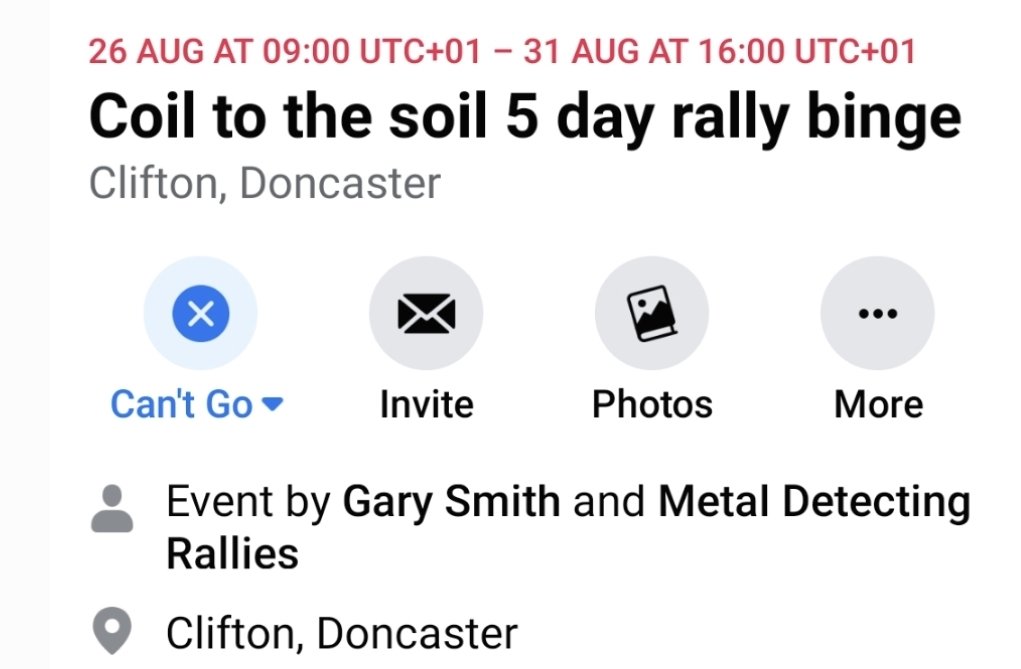
Upcoming commercial artefact hunting rally openly touting targeting a "Huge Roman Fort Complex". on a  630-acre farm near Doncaster. This is not "responsible metal detecting" and anyone going on such a commercial event has no right to call themselves "responsible metal detectorists", they are simply looters and the British archaeological community, media and government should say so. Why are they not? 

Also if they are too tipsy to drive, they are too tipsy to be wandering around a working farm, with all its hazards. The fact that this is allowed on such events should affect their third-party insurance should there be a claim. Has the company insuring them been informed of this circumstance? It is like the cannabis cake that was irresponsibly being distributed at a Coil to the Soil rally at High Melton near Sprotbrough, Doncaster a while back. Manchester detectorists were arrested with cannabis (here and here). The Sussex Heritage Hunters figured a cannabis leak in their club's logo.

This is not to mention of course that if an intoxicated artefact hunter finds something in an archaeological context, they are in no condition to make adequate notes of the context and associations and avoid damaging either.    


Friday, 8 January 2021

UK Metal Detecting Rallies in the Times (1)


Metal Detector rallies were discussed in an article in The Times yesterday: Mark Bridge, 'Detectorist Rallies leave pros in a hole' (sic) The Times Thu Jan 07, 2021. It's based on an earlier piece by Mike Lewis and Mike Heyworth in the current number (176) of British Archaeology ('Detecting rallies: Good for new detectorists, businesses and sometimes for charities, but not so much for archaeology'). Neither of them seem to be available for you to read online. It's pretty gratifying to see that after many years of activists like the author of this blog trying to get the PAS and CBA (of which Dr Heyworth was for many years the head) to publicly condemn rallies - precisely due to the damage they do to the archaeological record, as well as their commercialisation of archaeological material - they have done so. Finally. 

On a metal detecting forum near you, tekkies are livid. How dare the archaeologist Michael Lewis (they did not spot Heyworth's name) talk about the archaeological implications of what they do? Eh? Stephen Grey (Anglo Celtic Metal Detecting) from Birkenhead from a self-absorbed and entitled  position writes angrily on Facebook [punctuation added]
Dr Michael Lewis head of The Portable Antiquities Scheme showing his true colours in The Times newspaper. A shocking attack leaning towards untruths attacking the very hobby that keeps him in a well payed (sic) job. I think no matter how learned and respected this man is, he needs to print an apology in The Times and take a demotion for his efforts at least. Shocking behaviour by a man running the PAS, an organisation that would probably not exist if not for the very people he’s attacking. Not only has he done this on a public stage but he’s chosen his stage very carefully. The Times is read by many powerful people who might one day have a say in all this. How can they reach informed decisions if they base them on the likes of this ?

They can inform their decisions reading both sides of the discussion, Mr Grey. Why not open the MDF forum and LGD facebook page to Whitehall and the informed public so they can see the other side of the story if you think that they will find edifying what they see there? Like the offensive comments under Mr Grey's piece here... 

Of course the PAS is there to record public finds, not just those of artefact hunters. I see nothing at all in that text that "leans towards untruths" and I do not see any attack on metal detecting, but on certain practices within that hobby.  Furthermore if Mr Grey were to actually read the text, he'd see that Prof Lewis and Mike Heyworth did not "choose" the Times, but the Times chose to write about their article elsewhere. Tekkies, eh? 

'Old Baldy' writes (Thu Jan 07, 2021 6:23 pm) [punctuation corrected]

[...] I take issue with what he has said to the Times as he appears to be making comments based on hearsay and "rumours" without evidence to back it [them] up. If the PAS cannot get people to events, that is their problem to solve [...]
No, it is the problem of all (truly) responsible detectorists to alleviate. So would Mr Baldy recommend that instead of what he dismisses as 'hearsay' derived from 25 years of liaison with artefact hunters the PAS make a thorough investigation and submit an official report to the relevant government institutions about how much archaeological damage really is being done by all types of artefact hunting? If so, I agree wholeheartedly. PAS should have done this two decades ago and repeated it a decade ago and done an assessment of progress five years ago. But it did not.    

And yes, responsible detectorists would be avoiding commercial artefact hunting rallies. No "perhaps" about it of course - and the "time", Professor Lewis, for the PAS  to tell them (and society) that in no uncertain terms was also more than twenty years ago. 


The Times on Rallies (2)

UK tekkies have announced an intention to bombard the Times and its readers with the reasons why Portable Antiquities Head Mike Lewis (quoted there by the author Mike Bridges) is wrong about commercial metal detecting rallies. One even suggests that Prof. Lewis should be punished "We need to get him in the back of a van and gone" which sounds like a threat to me. 

Anyway, let's have a look. "Metal detector rallies (in general) are causing damage to archaeology". I'd say that was indisputable. That damage is "irreversible", again indisputable. The numbers of hobbyists doing this is "growing" - it would be difficult to contest that. And yes, a prime attraction is access to land where the individual artefact hunter does not need to go asking for access, but somebody does it for them, they have a fresh new search site handed to them on a plate with all the paperwork done. and that's what they pay for. 

Yes, hundreds of rallies are held each year, if we count 'club digs' and all the rest (and let's not forget commercially-organised 'metal detecting holidays'  either). There are now people that make a living organising them as a full-time 'job'.  

 So basically, I cannot see why tekkies have any issues with what is written there by Mr Bridges. Substantive comments welcome below. 

The next bit, introducing the actual article on which The Times piece is based (and quoting from it), is downright lyrical. I love the imagery of the "darkening fields" reference (instead of Thugwit, the author is citing perhaps Chuzzlewit). Anyway, I think I've found inspiration for a future article on "metal detecting".  "Detector-wielding clients" is exactly who rally organisers are making their money from. And of course the types of "Rambo-wannabe" outdoor clothing favoured by many British artefact hunters is pretty noticeable.  


Moving on. So this is where that nice man from the PAS, that has spent the best part of two decades pandering to artefact hunters, is quoted. "Most detectorists" searching the extensive sites made available by rally organisers "do not report finds with the Scheme". And that leads to "the loss of valuable data" . Digging them out of their context in general leads to a loss of valuable data. Full stop. Anyone who wants to context that is welcome, but please do us all the courtesy of reading why I say that here: Artefact Hunting and Archaeological Responsibility  (sections 1-7)

Do most report what they find at rallies? Well, in the advanced search, it just so happens that this is one of the filters, finds from rallies account for just 17,510 records (out of a total of on the PAS database). Yet PAS has (it says) attended 546 of them between 2005 and 2018 (and a few before and later). That's an average of 32 finds from each rally. That sort of figure does not suggest that many tekkies are coming forward with many of their finds at such events (which may have several hundred participants). But, yes, let's have a decent breakdown of the figures from the PAS.  

Saturday, 7 November 2020

Commercial Treasure Hunting Means Commercial Treasure Hunting: "We Wants Are Munny Now!"


Commercial pay-to-dig events organiser Paul Howard advises his 13400 members how to squeeze as much money out of the public purse when they ransom the public's cultural heritage, LGD is going to war with PAS/theTreasure system:
Paul Howard Admin 7th Nov 2020
TIP OF THE DAY !!
If you find anything and want a real valuation get it valued before it goes to the FLO / Coroner, The reason for this is to value anything it needs to be seen by the person valuing the item and you won’t be able to do this once it’s been given to flo / coroner and then if it’s to be kept by the British Museum it’s too late , You 99.9 % of the time will have to except [sic] their valuation which is always under valued [sic], You will have a chance to show them your valuations but only if you did it before they had it and you can use your valuations as some proof what it’s worth Just a heads up for beginners
Asked (by the same lady that found one of the gold coins on Tuesday), where their leader would recommend going to get a valuation, Paul Howard replies "Theirs [sic] lots of options, coin dealers and auction houses around the U.K. that deal in coins and artefacts, you can google them". This was then followed by a whole series of treasure hunters that had already tried this and the problems they had getting the decent answers they wanted to get as much money out of the public purse as possible as quickly as possible. Mind you, NONE of them is "in it fer the munny", they're "only intrestid in the 'istry" ("passionately"). 
Paul Howard complains: "[...] Most of LGD best gold finds was reported over 3 years ago and heard nothing back",
Andy Green: "I know all about it mate",
Paul Howard: "Shaun Murton, Are you still waiting to hear back from FLO, Nearly 3 years now isn’t it[?]"
Andy Green: " That's out of order!"
Paul Howard: "Tell me about it, Should never take more than 2 Max",
Andy Green: "got anything going through yourself mate?"
Paul Howard : "No mate but loads of LGD finds from 3 years to 4 years ago"
Andy Green: "think I'll be dead before mine pays out"
Paul Howard: "We’ve lost one of our good farms because of this gold ring taking so long , and other farms for the same reason farmers after a few years think your [sic] ripping them off, it’s disgusting".
Paul Howard: "NOTICE REGARDING REPORTED TREASURE As your [sic] probably aware a lot of items reported as treasure can take up to and over 3 years at present that was before covid, It will help me if all those who have reported treasure found on LGD rallies and still awaiting contact from FLO's if you can contact me with updates on the progress of your finds as I am now chasing up all these finds with the authorities for updates [...]
Note the adjective "reported" Treasure. This is followed by a whole series of personal comments on the FLOs including their private lives, such as frequency of pregnancies, who's had an operation (but also which FLO "gives excellent service [sic]" to metal detectorists. 

It seems these greedy half-literate halfwits that we see here have only a very rudimentary knowledge of the workings of the Treasure process. It seems nobody has taken the trouble to explain it to them in a way they understand. They here can be seen placing the whole blame for the delays and difficulties in getting their money quick on the FLOs. So for example that Ms X got pregnant is the "reason" why the Treasure ransom money did not come as fast as the finder wanted. 

I really do think that archaeologists of the Helsinki Ilk that want to paint a rosy-tinted view of "public engagement with the heritage" should spend a couple of weeks solid on the UK tekkie social media, and just see for themselves the reality behind the picture of "responsible and responsive" unicorns they try to paint. Then let them try and test that model of "responsiveness" by writing something on those same media. 

TAKE A GOOD LOOK at this behaviour, for these are precisely the sort of people the PAS wants to grab more and more millions of public quid to make into the "partners" of the British Museum, archaeological heritage professionals and to whom they want us all to entrust the exploitation of the archaeological record. Take a good look and decide what you think about that as a "policy".  

 
Creative Commons License
Ten utwór jest dostępny na licencji Creative Commons Uznanie autorstwa-Bez utworów zależnych 3.0 Unported.