|
| Ripped off temple art repatriated and on display at the National Museum of Cambodia (Kiripost/Mon Sokeo) |
To reclaim these objects, Cambodia’s
restitution teams rely on legal frameworks stretching back to lawsof 1900. After independence from France in 1953, Cambodia ratified various international legal instruments, including the Convention for Protection of Cultural Property in the Event of Armed Conflict (Hague 1954). Additionally, the government adopted a new cultural heritage law in 1996, and has signed Memorandum of Understandings (MoU) with numerous countries and organisations, including Thailand, the UA and China.
This legal and diplomatic work
responds to the historical movement of
Khmer artefacts out of Cambodia. Much of the lootings dates back to French
colonial rule. During this early period, some objects were removed with
formal government approval, while others were stolen and sold abroad. In the
19th century, French explorers documented temple complexes, removing numerous
statues and carvings, many of which remain on display in institutions such as
the Guimet Museum in Paris.
 |
| Lintel Depicting, a Reclining Vishnu from the Pre-Angkorian period, was returned from the USA in 2023 and is on display at the National Museum of Cambodia. Kiripost/Mon Sokeo |
Looting escalated dramatically between the 1970s and early 1990s, during the prolonged civil war and subsequent Vietnamese occupation. Khmer artworks became highly sought after on the Western art market, prompting thieves and trafficking gangs to strip temples in rural areas and smuggle statues and carvings across the border, most commonly to dealers in Thailand. From there, artefacts entered auction houses, museums, and private collections across the Western world, usually without documentation or official permission.
Momentum for repatriation increased sharply in 2013 after Cambodia succeeded in reclaiming objects looted from Koh Ker that had been publicly displayed in museums and auction houses. Since then, continued investigation, negotiation, and diplomatic pressure have resulted in the return of numerous sculptures, with many more still expected.
Public sentiment and strategic use of international media have played a crucial role in recent successes, Cambodia is benefiting from shifting global opinion that increasingly challenges museums and collectors holding artworks taken illicitly from their countries of origin. Alongside this is the strong voice of the Cambodian government, which continues to press for the return of stolen heritage. Nonetheless, officials note that the process is still far from complete, as large numbers of Khmer artefacts remain overseas.
I was altered to a BBC Sounds interview from BBC Radio Lincolnshire recently. It discussed the "Fake" Roman Dodecahedron and how it has caused upset. Naturally I was keen to listen. Here is a brief discussion on why I need to rant a tad about it.The photo attribution was changed from "Rights Holder: Lorena Hitchens" to "Rights Holder: Lincolnshire County Council" and a note added to the PAS record:
The Article in Question: https://www.bbc.co.uk/programmes/p0l1....
Original License suggesting CC [it is actually the PAS record Unique ID: LIN-BC9890 - PMB]: https://web.archive.org/web/202401230...
When and how the CC license was changed: https://web.archive.org/web/diff/2024...
"Notes:And "the [anonymous] private owner" is the same person that hides under the umbrella of respectability the PAS record provides? Yet both the common heritage belongs to us all, and the PAS database is there to make information about it (INCLUDING its shape, appearance, dimensions, weight, colour publicly available - for all to use... that's the blooming point of it). So what is going on here? Paul Whitewick has a valid point, and I'd be interested to hear the PAS expand on what their attitude is to all this.
Enquiries relating to the creation of 3D Models.
Please note that a license from the private owner of that object is required before creating and distributing a 3D model of the dodecahedron. However, the owner is choosing to remain anonymous. There will be a published report that will be submitted to the Lincolnshire Historic Environment Record (HER) although again the report will still be copyrighted by its author(s), so again, permission is required to use that (sic) data for any models."
Notification by
Lost Arts of Nepal (
@LostArtsofNepal)
FAITH STOLEN - Nepalese antiquities on sale today right under our noses at Galerie Zacke Auction, Vienna Austria 10/11th April 2025. Where is the documentation verifying they are not stolen?
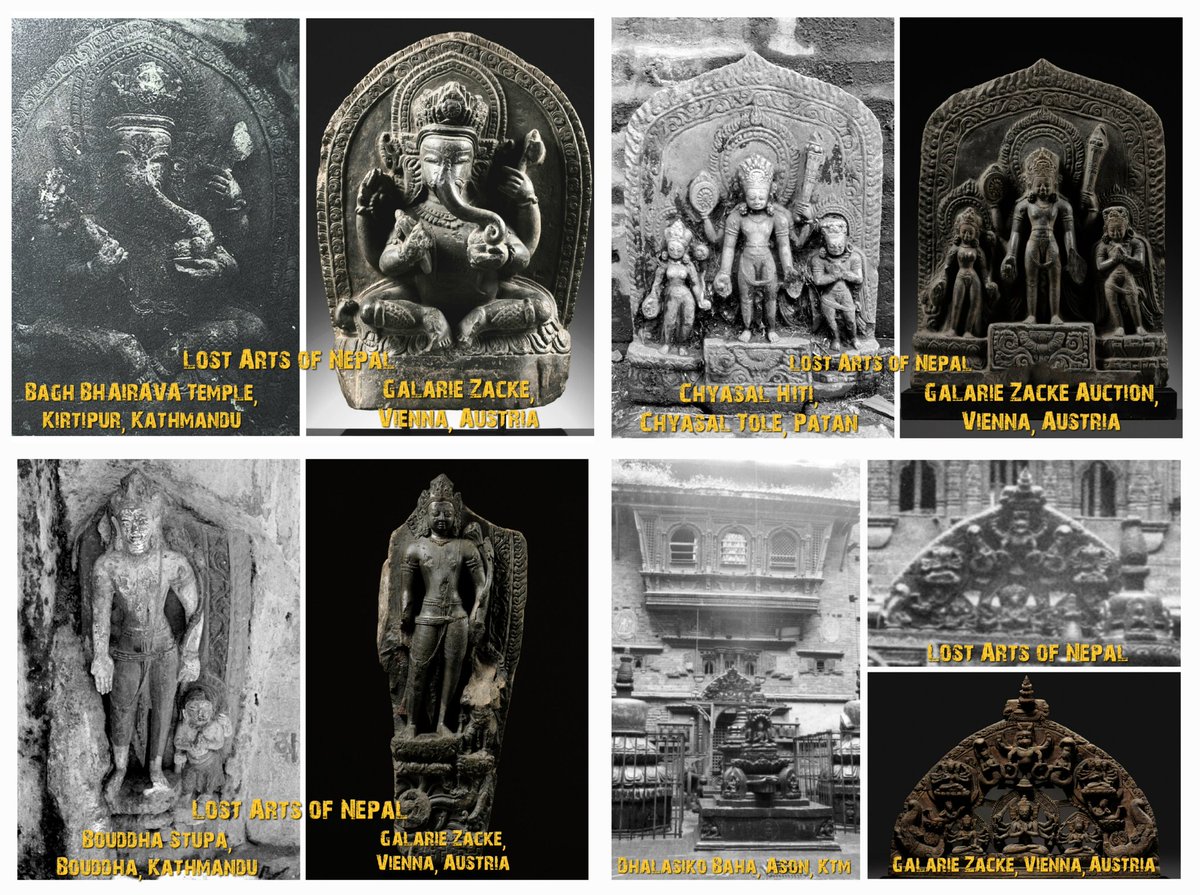 GALLERY ZACKE since 1968 - "House of tradition" (sic) for antique Asian art, known for the largest exhibitions and auctions of non-European art in Austria. But how does in get there? By what rigtht is it spold there, instead of being repatriated in the case of items that are illcit (ie have no proper documentation of legal acquisition and export)?
 Raymond G. Handley (1923-2009) partnered with Ray Renault in the 1950s to co-found one of California’s oldest and most successful real estate development firms. They were pioneers in shaping the early landscape of Silicon Valley, developing buildings for major tech innovators such as Intel and Raytheon, laying the groundwork for the region’s transformation into a global technology hub. Raymond Handley was a keen collector of art who traveled extensively, including the most remote parts of Papua New Guinea and Africa. In Mali, where his brother served as the Ambassador of the United States, he drilled more than fifty water wells for Dogon villages. His passion led him to establish Folk Art International/Xanadu Tribal Arts, an ethnographic art business which developed into the Xanadu Gallery in the late 1990s, located in the historic Frank Lloyd Wright building off Union Square, and continued by his widow Marsha Vargas Handley until her retirement in 2015. Having opened her first gallery in the Bay Area in 1973, she is an important figure in the Asian art world in her own right, serving as the president of the International Netsuke Society for over 16 years. Raymond Handley’s first visit to Spink & Son took place in the early 1980s, between Christmas and New Year’s, when much of the staff was away on vacation. During this visit, Raymond was captivated by the gallery's impressive selection of fine works and quickly amassed a collection of over 100 items he intended to purchase. This large number caused some concern for Anthony Gardner, head of Spink’s Southeast Asian Department, who had never dealt with such a sizable transaction. As the total approached 108 items, Anthony suggested Raymond stop there, citing it as an auspicious number. To this day, 108 remains the record for the most works sold in a single day, and it became customary thereafter for the staff to remain at work during the holiday period.
|
Year |
No. of detectorists |
No. of finds p/a |
|
2018 |
29/30,000 |
907,500 |
|
2019 |
32,000 |
968,000 |
|
2020 |
33,000 |
[998,250] |
|
2021 |
34,000 |
[1,028,500] |
|
2022 |
36,000 |
1,089,000 |
|
2023 |
37,000 |
1,119,250 |
|
2024 |
38,000 |
1,149,500 |
BBC 'Nighthawk suspect arrested in field' BBC 9th April 2025
A man has been arrested on suspicion of illegal metal detecting [...] Norfolk Police said officers patrolling Methwold Hythe, near Downham Market, spotted activity in a field at about 02:30 BST on Monday. A man in his 40s was arrested on suspicion of theft. Officers said a metal detector and spade were seized along with a quantity of metal coins. The suspect was taken to King's Lynn Police Investigation Centre for questioning, and was released on bail until 12 June.Interestingly, perhaps the tide is turning and the message is getting through, this is the first such reportt that I have seen for ages without the cut-and-paste addition that "the majority of metal detectorisys are responsible law abiding searchers, reporting all they find increasing our knowledge of the past". Good. Because its not true.
The Taş Tepeler project in southeastern Turkey, centered around Şanlıurfa Province, involves the excavation of multiple prehistoric sites dating back to the Pre-Pottery Neolithic period (approximately 10,000–7,000 BCE). These sites are significant for the occurrence on some of them of monumental T-shaped pillars and the insights they provide into the transition from hunter-gatherer societies to settled communities. The project currently encompasses the following excavated sites: