Tuesday, 30 December 2008

Archaeology with balls

Over on the left of this blog is a little map widget which shows where people are reading this stuff, and gives (limited) information on what they read. I notice that this week there’s quite a few from France (bonjour) and one person did a search for HAPPAH – and I realize he did not find any post on the topic. So here is one.

This is a wonderful group of people doing what British archaeologists used to do before they lost their will to try and protect the archaeological heritage from this sort of erosion, and have now become “partners” (sic) with the artefact hunters. British archaeology once had a STOP (Stop Taking Our Past) campaign before they “dropped the ball”. The French organization has taken it up and running with it. Good for them. I wonder how many British archaeologists are even aware they exist? I wonder how many of them, if they knew, would support them?

Milken the Past


The Milken Institute has published a report Financial Innovations for Developing Archaeological Discovery and Conservation (December 2008)which so far has aroused some interest in the world of portable antiquities collecting (outside the UK) but little in archaeology (but see David Gill's discussion here and here). Basically one of the main theses is that rescue excavation could be financed by selling off (part of) the excavation archives (finds) to collectors. We’ve heard that before… Sometimes I wonder why it is that archaeologists are so lax about getting over to people what it is they do, and why and what an excavation produces and what is done with these data.

I was interested in the (all too brief and typically superficial) presentation of the UK’s Portable Antiquities Scheme (page 9). They say “

The scheme has also been criticized by some scholars as legalizing looting, promoting the removal of artifacts by amateurs. Proponents of the plan counter that the looting was happening already and that the scheme encourages those who have looted to at least document what was taken and from where, preserving minimal cultural context.”
Hey guys, talking about this “looting that was happening already”, you are talking about the PAS new partners, the shed-owning metal detector wielding portable antiquity hunters of Great Britain. You can’t call them “looters”, its not politically correct, you know.

Monday, 29 December 2008

Collectors and looters in South Dakota

Much has been written about the effect of the capacious and expanding no-questions-asked antiquities market in the US on the degree of looting of the world’s archaeological sites. US Collectors are especially vocal in their use of all sorts of arguments to defend their “right to collect” pieces of a past coming from other people’s archaeological heritage. It is therefore interesting to see how public opinion and law enforcement authorities deal with the threat portable antiquity hunting and collecting collecting causes to the archaeological heritage of the USA.

Josh Verges writes of the federal indictments earlier this month of three men accused of trafficking in Native American artifacts in South Dakota which “reveal a lucrative trade centered on the illegal harvesting of a culture's buried history” in the heart of the USA. The investigation continues with the possibility of more indictments, and those already filed involve "a significant number of artifacts."


Brian Ekrem, 28, of Selby and Richard Geffre, 49, of Pierre allegedly sold three copper arm bands in violation of the Native American Grave Protection and Repatriation Act and were involved in the collection of many other artifacts, including beads, arrowheads and bone tools. Scott Matteson, 60, of Fort Pierre is accused of buying red stone discs, arrowheads and a sandstone scraping tool, all of which had been removed from public and Indian lands.
In the context of the discussion of the current no-questions-asked portable antiquities market it is notable that Matteson (who like the other two pleads not guilty) “said last week that he bought the items from an artifacts dealer and he did not know their origins”.

In the US, Federal laws prohibit the removal of human remains, funerary items and other sacred items from Indian land and public land. It also prohibits anyone from knowingly buying those items. The law does not however stop landowners from digging or collecting those items on their own property; leading to a very patchy system of protecting the archaeological resource. Obviously if, mindful of this, collectors demanded and retained evidence of legitimate provenance of the artefacts in their personal “artefact museums” then Matteson would not have had any problems with the authorities. Nor would the authorities now have problems in sorting out the origin of the items in his “38-foot trailer filled with Native American arrowheads, pots and other relics, which he has collected during the past 50 years” which was recently confiscated by federal agents. (I guess its convenient it was on wheels and not in a garden shed as many UK “metal detectorists” use to “curate” their collections).

Mr Matteson said he “began collecting arrowheads as a child when he would get farmers' permission to search their cornfields and keep an eye out while fishing with his father. When the Archaeological Resource Protection Act of 1979 restricted the collection of artifacts from riverbeds - navigable waterways are public land - he turned to auctions and gun shows to build his collection” (gun shows?). Matteson said: "I scoured the country for those arrowheads. I put my life into this. I built this museum to go to schools to teach and show kids," Are there no proper museums in South Dakota that its inhabitants have to rely on a collector’s show-and-tell session from a rock-shop owner to learn about their region’s past? Presumably the region has had some rescue archaeology where is the material from that archived? Perhaps it is a lack of cultural outreach about the rich prehistory of the territory of North America which leads its citizens to hanker for bits and pieces looted from archaeological sitres across the seas?

Looting of native American sites by artefact hunters is a large problem in the area. University of South Dakota anthropologist Brian Molyneaux pointed out that "As tribes hold every place and every remnant of the past as part of a living legacy - central to their religions and histories - each act of looting is yet another in a very long line of aggressive attacks against them, when they only want to live at peace in their own land."

"Hold every place and every remnant of the past as part of a living legacy”

That seems something that US portable antiquity collectors should try to get their heads around in their rants about the “archaeologists” who are trying to conserve the archaeological resource in situ. The focus of discussion these days is not so much national identity (pace Cuno) but about power of place.

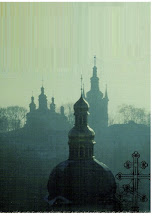
Photo: Sioux territory in the Dakotas.

Office Party faux PAS?


Readers of this blog will hardly be surprised to learn that the UK's Portable Antiquities Scheme is not on my Christmas card list this year. I was therefore surprised to find on opening my mail this morning that I was on theirs.

I received a card posted in Cambridge on 20th Dec. Inside in Michael Lewis' handwriting it says "Dear Paul, merry christmas and many thanks for all your support for PAS in 2008!" and underneath are signatures of 23 members of PAS staff. It is not unlikely that this originated as some huge sarcastic joke at a December get-together of FLOs and PAS staff, presumably the office Christmas party and perhaps at this stage they were very very merry. As perhaps were the post office workers who delivered it to Poland with only a first class stamp on it (overseas mail costs more).

I found the picture on the card appropriate. Its a fragment of a fresco in the Milan Pinacoteca di Brera (I think) by the Lombard artist Bernardino Luini (c. 1475-1531) showing angelic musicians. The irony of this is that works by Luini were extremely popular among private collectors from 1790 to about 1900, as a result of which many of his frescoes were detached from their original settings as an integral part of the interior decoration of Renaissance buildings in northern Italy and scattered to the four winds. Rather like the portable antiquity collectors with whom the PAS is now in "partnership" are doing to archaeological sites (ripping out their integral parts to form part of scattered personal collections). Many of Luini's works in private hands have suffered through inappropriate handling and many have lost their provenance, which is a shame given the scarcity of documentation on the painter's life and work.

Thank you Sam, Wendy, Ciorstaidh, Anne B, Laura, Kate, Adam, Julian, David, Anja, Rob, Michael, Illegible 1, Illegible 2, Anni, Katie H, Kevin Leahy, Roger, Frances, Illegible3, Jennifer, Liz and Geoff for the Christmas wishes, I hope you all had a good Christmas break and return to work refreshed and ready for the fray.

Photo: Luini's angels

British archaeology-collecting partnership in action


"This website is a resource designed and maintained by metal detector entusiasts (sic) to record finds and promote good practice within the hobby." That's what it now says on the revamped Council for British Archaeology website about the UK Detector Finds Database . The world has gone mad.

I think the archaeological community is entitled to ask what the CBA's definition of "good practice" in the hobby of artefact collecting actually is. There are a number of highly significant differences between the UKDFD and the Portable Antiquities Scheme, and it is for this reason the latter, and not the former figures in the Code of Practice for Responsible Metal Detecting in England and Wales, which - believe it or not - the CBA had a large part in brokering.

It is perhaps significant that this does seem to be one of the few links on this section of the CBA's new webpage which actually works. What a shambles.

Saturday, 27 December 2008

Archaeology for All? US Portable Antiquity Collectors' Schools Outreach

.
Scott Uhrick of Ancient Coins for Education is seeking donations of cash or uncleaned ancient coins to help the ACE in its work. ("we would like to remind everyone that we are a registered Not-For-Profit and all donations to us of cash or coins are tax deductible”). These coins go to selected teachers:

many of whom have set up small collections of their own and use them in their curriculum. Cash goes to support the main program of getting ancient coins into the hands of students studying a relevant topic such as Latin. Our goal if to share our appreciation of the beauty and history in these artifacts with kids who may hopefully grow into collectors in their own right.
This reveals the main purpose of this organization, to create potential new collectors to help US purveyors of other countries’ antiquities expand their market.

Earlier, ACE Board President Mark Lehman too admitted the purpose of the organization was to help expand and protect the market in contextless archaeological artefacts. He
wrote in December 2007:

We profoundly hope these coins will serve, as intended, as a sort of "dragons' teeth" seed, sown in the hope and expectation of raising a whole new generation of collectors [...].
... who will form a numerous army of warriors for the Cause, no doubt. It is no surprise whatsoever to learn that the ACE is fully supported by the pro-collecting ACCG.

The ACE website says, "The heart of the program consists of
authentic 4th century A.D. Roman coins that the students receive to prepare, to identify and to keep." But where do these ancient coins being handed out like candies by US Latin teachers come from? Not from archaeological sites in the USA that is for sure.

As
ACE blithely admit:

The vast majority of uncleaned material on the market at the present time comes from Eastern Europe - the "countries formerly known as Yugoslavia" and Bulgaria in particular - but ancient coins can be and are found wherever the people who used them lived. Coins are also commonly found in Western Europe and Great Britain as well as the Middle East, Turkey, and Northern Africa.
In most of the places named the coins are produced by illegal excavation of archaeological sites on an almost industrial scale (as in Iraq – in the “Middle East”) and their smuggling in huge quantities to the US is something that has been highlighted by a number of cultural property activists (such as Nathan Elkins, here and here). The looting in Bulgaria has reached crisis proportions and the mafia is deeply involved in this trade. The huge US market for these looted coins is one of the motors which keep the activity profitable for those involved. We may legitimately ask what steps ACE is taking to ensure it is not indirectly putting untaxed US money into the pockets of foreign criminals.

A year ago there was a
similar discussion on US antiquities dealer Dave Welsh’s Unidroit-L forum (misrepresented by Wayne Sayles on his blog, commented by David Gill). Then it was ACE’s Mark Lehman who wrote of managing “with our supporters' gracious help, to place tens of thousands of genuine ancient coins in the hands of thousands of students in hundreds of schools and educational venues across the US and Canada.” I asked whether that was
tens of thousands of provenanced coins which you can show the teachers and kids an export licence guaranteeing the recipients that you are giving the kids of law-abiding American and Canadian citizens legitimately-obtained material? A provenance they can look up on a map? Or is that tens of thousands of totally unprovenanced coins liberated by the "free enterprise" we hear so much about here from such restraints? Or is that one of those little details which the ACE "avoids like the plague" in presenting coin collecting to these kids?
Needless to say, as in most cases when one challenges the glib mantras of the pro-collecting lobby, I did not get a satisfactory answer.

Lehman's text "How to address the collector/scholar vs. AIA "no one but the 'experts' should have access to antiquities" viewpoints…." to which I referred is well worth consulting for the twisted arguments offered by the pro-collecting lobby against the those who raise resource conservation concerns. The ACE is, we are told a form of “Archaeology for all”. By liberating archaeological evidence from the possibility it might fall into the hands of elitist foreign archaeologists, the dealers and collectors of ACE are bringing the past to the people (or the USA and Canada). I'd like to hear the pro-collecting lobby to define properly and unambiguously when collecting of portable is and is not "archaeology for all". So far nobody seems keen to do this.

It is of course perfectly possible to create a hands-on educational resource by buying well-provenanced fourth century Roman issues arranged in a travelling handling collection which could be lent out to US schools. Coins could have a variety of imperial portraits, reverses, inscriptions and mintmarks and all with a valid export licence. Such coins could come from a number of dealers and "metal detectorists" in the UK, for example. As educational material, British Roman coins are ideal because the province has a substantial literature about changing patterns of coin supply based on a close study of archaeological finds (John Casey, Richard Reece and others). Such a handling collection could be created without a single coin having to be clandestinely or illegally excavated or smuggled into the US. Emphasising that in the classroom would in itselfhave an important educational value - teaching of conservation and responsibility. I think we can guess though that the latter is not what the ACE are interested in teaching US kids.

The main issue here is one concerning the conservation of a resource rather than one of personal rights and access. The real problem about all these coins is (
and always has been) where the coins used in the ACE programme come from and what they represent. I note that is one answer that Lehman refuses to address in any detail, except suggesting they come from 'potato fields'...

Its a shame that ACE avoids discussions of the ethics of all this "like the plague". Treating both sides of the issue (instead of the glib and meaningless platitudes ACE offers as your "answers" to the "AIA" critics) would be an ideal opportunity to produce a young generation who truly "can keenly appreciate" the need to cherish the remains of the past. Let them have all the information on which to base their own informed decisions if they want to become collectors or conservationists.In the entire ACE website (including the lesson plans), there is not a single mention of any of the issues raised in criticism of the current status quo regarding collecting unprovenanced ancient coins. If the ACE’s real aim was to provide an educational resource about the study of the past, in the interests of providing a balanced overview of the topic, there should be at least a mention of this topic, if not for example a link or two to online resources such as the SAFE article about "
why coins matter" and the discussions about it.

When I was a kid, a subject was good and inspiring because the teacher was good and inspiring, not because they gave out gee-gaws in the lessons. There are other ways of becoming interested in the past than collecting unprovenanced bits of other people's archaeological heritage.

I would like to know when we are going to see the AAE “Ancient arrowheads for Education” a pot-diggers and arrowhead collectors’ group with a “program of getting ancient Native American artifacts into the hands of schoolkids all over the USA to share our appreciation of the beauty and history in these artifacts with kids who may hopefully grow into collectors in their own right”. US Pot-diggers unite, archaeology for all.

Thursday, 25 December 2008

St. George man among 19 pardoned by Bush

A man convicted in 1992 of digging up ancient Indian ruins on public lands in Garfield County is among 19 people being pardoned for various crimes as President George W. Bush prepares to leave office (Ben Winslow, 'St. George man among 19 pardoned by Bush', Deseret News, Wednesday, Dec. 24, 2008). According to Deseret News reports from the time (Matthew S. Brown, Two S. Utah Men Get Probation for Digging Up Ruins', Deseret News Oct. 7, 1992), in 1991 David Lane Woolsey and co-defendant Jimmy G. Barney had been seen by hikers digging in an ancient Indian ruin at Boulder Creek near Escalante. Both men ultimately pleaded guilty. The prosecution came at a time when authorities were cracking down on archaeological thefts and Federal prosecutors had sought to send a "significant message" about a trend of archaeological site vandalism by artefact hunters.Woolsey was convicted of an aiding and abetting violation of the federal Archaeological Resources Protection Act . The penalty could have been two years in prison, but U.S. District Court Judge Thomas Greene settled on a sentence of three years probation and 100 hours of community service (they also seem to have had their vehicles confiscated). "I know I done wrong," Woolsey said. "But I feel grateful I got a second chance". A federal felony conviction stays with a person for life and strips a person of his or her right to possess a weapon or vote. Woolsey said he wanted the pardon so he could get his gun rights back and go hunting with his son. He also felt he had been discriminated against on the job market because of his record. Apparently the pardon had been sought by his wife about two and a half years ago, filling out an application for clemency on the Internet.

Among others pardoned by the US President at the same time are people convicted of such crimes as arms smuggling, possession of an unregistered firearm and cocaine distribution, conspiracy to harbor and transport illegal aliens.

While one sympathises with Mr Wooley's plight, this pardon gives out the wrong message to the public about the seriousness of the prblem of the looting of the archaeological heritage for collectables. The media are silent about what happened to Mr Barney.
 
Creative Commons License
Ten utwór jest dostępny na licencji Creative Commons Uznanie autorstwa-Bez utworów zależnych 3.0 Unported.