Sunday, 21 May 2023

Collectors and their Notorious Inability to Profit from Sharing Information


             Bit of a yellow coffin            

Over on Tuppenny Tim's foundering Ancient Artifacts forum, where now only a handful of members form the core of the discourse, a collector has a disturbing question:
Cleaning yellow coffins #egypt
Does anyone know how museums cleaned the so-called 'yellow coffins' from 21st dynasty. I know it is done piece by piece with a cotton swab, but I have no idea what one uses on the cotton swab to By Dikencis Van Bommel · #98543 · May 20
Yes quite a few people have very clear information on this topic. Paul Barford knows, but he's been banned from sharing that information on the list ("notorious" it says). Notorious or not, but he also knows could have said why it is very likely that another collector (doing a proud "I'm better informed than the dealer who sold it to me" show-and-tell), was "had" by that dealer, and thus other buyers on the list could be given an idea what to look for in buying anything similar. Of coure I'd also point out that if you buy an object with zero provenance and zero collection history 'grounding' it, and in addition apparently have next-to-no idea about the ancient technology of making the object you are looking at, you will end up looking a bit of a fool. And if a no-questions-asked buyer has been boasting about how they got one over on the seller that sold them a dodgy "antiquity", they look like a pompous fool. So, possibly best to keep off the forum people that can see through the collector-bluster. That way everyone in the mutual-admiration society is kept in the dark and the dealers can continue to deal the crap.

Saturday, 20 May 2023

Bakhmut Museum


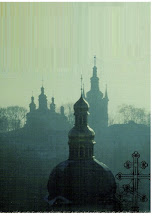
Bakhmut (in 1924-2016 - Artemovsk (in Russian) or Artemivsk (in Ukrainian)) is the oldest historical and cultural center of Donetsk Oblast, standing on the banks of the Bakhmutovka River about 65 km northeast of Donetsk. [history - UkraineTrek.com]. Before the Russkiy Mir came: "Located in Donetsk Oblast, Ukraine, Bakhmut is home to an impressive selection of attractions and experiences, making it well worth a visit". Bakhmut·sʹkyy Krayeznavchyy Muzey - Local history museum ( Nezalezhnosti St, 26 Bakhmut Donetsk Oblast, Ukraine)
The Bakhmut state museum of local lore originates from the district historical and local history museum, founded in 1924 by the doctor and naturalist Borys Valkh. It is located in a building built in 1911 by Bakhmut industrialist Veniamin Frantsuzov. In twelve halls there are expositions of the departments of nature, archaeology, folk life, history of the 19th century, the Ukrainian revolution, 1920-1930 years, the Second World War, post-war five-year plans, literature of the native land. The most valuable exhibits: a late Paleolithic flint axe, a collection of Bronze Age weapons, a unique collection of items from the workshops of ancient metallurgists, a Scythian statue of the 6th century BC.
The Bakhmut Museum of Local Lore was completely destroyed by Russian troops during the large-scale Russian invasion of Ukraine in 2022.
Video: Shelling of Ukrainian held positions in progress.

Friday, 19 May 2023

Native Americans Treated as Wildlife

The National Museum of Natural History is hiring a Repatriation Program Manager. They will perform work related to the inventory, documentation, tribal consultation, & repatriation of Native American ancestors, and archaeological\ethnographic objects https://usajobs.gov/job/724451400
Why are physical remains of Native American communities in a "Natural History museum" anyway? How insulting, displayed among the stuffed birds, pressed flowers and shell collections. In how many US states have the natural history collections not been renamed "Natural History and Indigenous Culture Museum" yet?

Thursday, 18 May 2023

Tragic Anniversary: Stalin's Ethnic Cleansing of Crimea in 1944


Today is the 79th anniversary of the night when the deportation in cattle trucks was begun of 191,000 Crimean Tatars from their homes in the autonomous Republic of Crimea to Uzbekistan, deep in the Soviet Union. They had 30 minutes to pack and the deportations were conducted in just three days[background: wikipedia]. Their abandoned properties were given to Russian families who moved into the area soon afterwards. It was only after this forced displacement that Crimea became "Russian" (that is, merely an oblast within the Russian SFSR) for just ten years (1944-1954) before being transferred to the Ukrainian SSR in 1954 - thence to Ukraine after Independence
video


Sunday, 14 May 2023

Archies Trusting Metal Detectorists [updated]


Ooops.
James Bonsall "Challenges of Working with Legacy Data from Detectorists : A Case Study in the Fabrication of Evidence" 01 Sep 2019 http://fieldsofconflict.com/c_paper.php?id=31&act=full


[the link is now broken] Bonsell writes:
"In 2016 I attended the fantastic Fields of Conflict Conference at Trinity College Dublin, where I presented work that reassessed an earlier collaboration with metal detectorists in the UK, in light of some new and rather damning evidence. The Proceedings of that Conference have just been published in a peer-reviewed Open Access book Conference Proceedings: Fields of Conflict, 2016; Trinity College, Dublin, Ireland. Essentially, my new paper reveals that my earlier assessment of a metal detection finds archive, published in a 2007 volume of the Journal of Conflict Archaeology, was strongly influenced by what are now understood to have been possible fabrications made by the metal detectorists themselves. As my new publication points out:
“This paper should be considered both a retraction and a brief reassessment of the earlier work in light of new evidence, as well as a cautionary tale to researchers on the use of legacy data. The reader is asked to excuse the slightly autobiographical tone of this paper, as it is one of disappointment, embarrassment and reflection, that needs to be addressed.”
If that piqued your interest, then read on, for it is an Open Access publication and free to all, thanks to the fantastic endeavours of editors Tim Sutherland, Damian Shiels, Gavin Hughes and Simon Sutherland".

Sunday, 7 May 2023

Bits of an Afghan Genizah that was not a Genizah, Just a Looted Assemblage, now Exhibited as Trophies by Israeli Collection


"In a few months, with the inauguration of the new building of the National Library of Israel, millennium-old historical documents belonging to the lost Jewish community of Afghanistan will be presented" ( YItzhak Tesler, 'A glimpse into the mysterious Jewish community of Afghanistan', Ynetnews 1st May 2023).

"The rare and important collection was acquired with the support of the William Davidson Foundation and the Haim and Hanna Solomon Fund" [...] "Dr. Finkelman, for understandable reasons, avoids giving straight answers to how exactly library staff acquired the rare documents".
It's supposed to be OK, because if the documents had remained in the source coutry, Ghengiz Khan would have destroyed them, the Library argues.

See also: Nir Hasson, 'From Afghan Cave to Jerusalem, a Treasure Trove of Silk Road Jews Reaches Israelis' Haaretz Sep 15, 2016

Saturday, 6 May 2023

Coin Sellers Jailed in UK


  Craig Best and Roger Pilling (Photo: Durham Police)


Two men who tried to sell 44 rare Anglo-Saxon coins worth £766,000 have each been jailed for five years (BBC, Anglo-Saxon coin plotters Craig Best and Roger Pilling jailed' BBC 5th May 2023).
As mentioned earlier, Craig Best, 46, from Bishop Auckland County Durham,  and Roger Pilling, 75, from Lancashire, were caught in a police sting in May 2019. They were accused of trying to sell coins that were part of an undeclared Viking period hoard from near Leominster, Herefordshire, by two different metal detectorists in 2015. In Durham Crown   they were found guilty of conspiring to sell criminal property and both jailed for five years and two months. 
 Prosecutor Matthew Donkin said Best, of South View, Bishop Auckland, and Pilling, of Loveclough, near Rawtensall, were trying to sell the silver coins on the black market to buyers outside the UK and asked for payment in cash, which would mean there would be no record of their existence or whereabouts. [...] HHJ Adkin said Pilling was the "brains behind the operation" and bought the coins on the "black market" in 2016. The judge said he was sure Pilling knew the significance of the coins and that they could not be sold on to a legitimate UK buyer as their importance would quickly be realised and reported. Pilling [...] had "collected precious objects for the whole of his life"

The price he paid the seller of these coins (who, interestingly, is not named in the reports of this case) was not given. In order to monetise his investment, Pilling then: 

contacted Best who had a "chequered past" and American contacts who might buy them, the judge said. Best attempted to sell them to a US-based expert who notified historians at the Fitzwilliam Museum in Cambridge with the police ultimately being informed. Best was caught trying to sell the coins to undercover officers in a sting operation at the County Hotel in Durham in May 2019.

and led the investigators to Pilling. There were 44 coins found during the search of the two men's properties, but 

the court heard Pilling had photographed two further coins valued at more than £100,000 whose whereabouts are now unknown. Mr Pilling [...] claimed the fragile coins broke when he dropped and stood on them so they were binned. The judge said [...] he didn't accept the two missing coins had been damaged and believed they had been "hidden away". One of the coins worth £85,000 would have been the most valuable in Pilling's collection and it would have been an "odd coincidence" for that to be one the that was destroyed, the judge added. He also said both men told "many lies" throughout the investigation and trial and described their efforts to cover their tracks as "amateurish".
Best claimed that he had no idea they were criminal property, Durham Crown Court has been told (BBC, Durham man had 'no idea' selling Anglo-Saxon coins was illegal 24 April 2023).
Giving evidence in his defence, Craig Best said he had known co-accused Mr Pilling, 74, for 10 years. They were keen metal detectorists but had no discussion about selling the coins, he said. He claimed Mr Pilling had told him that he had bought the coins before the Treasure Act 1996 was brought into law. [...] Mr Best told the court he would not have got involved had he known the coins were part of a hoard. "I have young children. I wouldn't have taken that risk because dealing with them would have been illegal," he said. "I wasn't one hundred percent sure what they were. I was just trying to get them checked out." He was also asked why he had carried out searches on the internet about previous hoards found. He said: "I'm a detectorist. That's what we do." Asked if at any point he knew or believed the coins to be criminal property, he said "no".
The 46 rare coins of the same narrow timespan and typology just dropped out of the sky, no doubt.
 
 
Creative Commons License
Ten utwór jest dostępny na licencji Creative Commons Uznanie autorstwa-Bez utworów zależnych 3.0 Unported.