Showing posts with label public outreach. Show all posts

Tuesday, 26 August 2014

British Archaeology, Outreach and "Little Green PAS-Men"


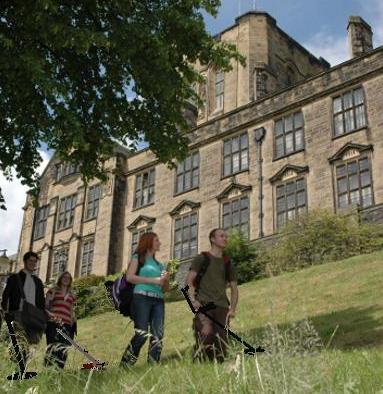
Volunteers arrive in mismatched camoflage

The secrecy surrounding the Heritage Lottery-funded PAStExplorers recording scheme to be manned by mysterious 'volunteers' has aroused much speculation in recent months. The PAS is refusing to say where these volunteers will be recruited, who they will be, what milieus they will be they are coming from and what interests they have in strengthening the PAS hold on archaeological outreach. In particular, there has been total silence on the all-important question of the security of findspot data in the hands of these 500 unknown individuals scattered in ten regional centres, or indeed to what data and resources these people will have access. A PACHI reporter was in Bloomsbury Square this morning as the first volunteers arrived for briefing at 41 Russell Square, Camden Town:
As a column of muddy cars arrived outside number 41 on Monday morning, a pirate flag fluttered from one of its windows. As the volunteers clambered out, locals crowded around them in the square. There was rampant speculation about who these men in mismatched camouflage were. The men themselves were reluctant to talk to journalists about their identity or intentions, though it was clear that there were definitely green men among them. From their demeanour it appeared that the bulk of them were not  professional finds specialists. Several people peered nervously into the back of one of the cars, there were long packages there, which could have contained metal detectors or weapons, but onlookers were quickly ushered away and the men filed silently into the building.
The whole idea of the PAS was so that members of the public who'd found archaeological artefacts would be able to take them directly to an archaeologist who would then 'liaise' with them and thus provide public outreach and where necessary guidance and encouragement on 'best practice'. That concept quickly became bowdlerised to 'best practice=going to the PAS'.

Now it seems the core element of the Scheme is being scrapped, members of the public apparently will not be coming into direct contact with real archaeologists, but volunteers 'trained' to fulfil the role of pretend archaeologists (who very well may then 'liaise' with the archaeologists they are working under). The whole concept of liaison has all-too-clearly been subsumed under the overall aim of "getting as much stuff in the database, no matter what" which is simply a perversion of the reasons why the Portable Antiquities Scheme was set up. The database was a tool and not the aim in its own right it has now become.

Meanwhile there are justified grounds to believe that many of these 'volunteer ersatz-liaison officers' will in fact be coming from artefact hunting and collecting circles, and not in any way representing to the public the aims and concepts of archaeology, but an object-centred approach to the past (PASt). This is exactly the equivalent of the un-unifoirmed and unacknowledged "little Green men" who are presently an instrument in the attempt to wrest Crimea and the Donbas from the Ukrainians through clandestine infiltration through poorly-defended borders.

PAS, when will you inform us, who - specifically - ARE your little Green Men going to be? 


Tuesday, 8 April 2014

Deep Digger Dan has been Invited to the PAS?


.
Bloomsbury Pete, the national representative of Avian Concern for Cultural Heritage, the most vocal portable antiquities issues advocate in Bloomsbury has informed PACHI that Deep Digger Dan, the popular evangelist of a certain brand of metal detecting has been invited by Roger Bland and his Merry Men in Bloomsbury to pay them a visit and discuss "matters of common interest" while the whole debate is filmed. I do not know how reliable this information is, it certainly would be a smart move on the part of the PAS since Mr Dan has far more followers of his videos than the PAS has for its own "Metal Detecting Best Practice" series of You Tube videos (currently 47,941 more to be exact, because the PAS currently has just six subscribers).

Tuesday, 27 March 2012

Preservationists with "Personality Disorders"

.

Dugup coin dealer Sayles tries to transform a campaign against the trade in illicitly and illegally obtained artefacts and the indiscriminate no-questions-asked practices which shield it into one against "collecting" generally. That of course does not bear scrutiny, the evidence of the deceit is far too abundant. So, running out of other arguments, he tries the ad hominem. He calls calls to clean up the antiquities trade from the 1980s "a hysteria of ideological excess":

Since then, any opposing thought has been ruthlessly ridiculed and attacked with increasing hostility. Today, the level of attacks against those who oppose national control of their personal cultural freedom [to benefit from the illicit trade in antiquities - PMB] has seriously escalated and that "crusade" is being led by ultraists. Not the least of these are a group of internet trolls who suffer from acute personality disorders and lack any other purpose in life.
Typical ad hominem, and reliant on his readers accepting uncritically the assumption that anyone who opposes the illicit trade in antiquities must in some way be mentally challenged. After all, it seems apparent from their reactions that for many of them, the disappearance of such artefacts from the market would means "the end of the hobby".

Another assumption accepted by the coiney readers of such things is that there would be nobody on the other side (their side - working in support of the maintenance of a no-questions-asked market) who could be considered as "ultraist" or one could suspect of having any kind of personality disorder. Such as one leading them to write of "goose-stepping" archaeologists, dressed in "space cadet" uniforms, and who will be hanging by the neck from a "lamppost on Constitution Avenue" when the oppressed American masses rise up against a corrupt political system and other such stuff (most of the posts to which I link have been deleted by their authors when attention was drawn to them). Then we have the comparison between attempts to clean up the antiquities market and the most shameful of the US witch trials of the seventeenth century. These are things written by supporters of no-questions-asked coin-dealing, and by members of the Board of Directors of the ACCG. Perusal of such lists as Moneta-L, Unidroit-L (especially) and Numismatica-L will soon reveal a number of people with a style of writing about preservationists and their own (and others') governments which also betray some sort of serious problems with coping with reality.

To return to preservationists, Sayles' own closests sidekick Dealer Dave had his psychologist wife diagnose "one notorious anticollecting archaeo-blogger" on the basis of - not an interview with him, nor any extensive reading what he himself writes and publishes - but "some of what was posted in my blog regarding the utterances" of the subject. So the methodology of Californian psychologists is to diagnose subjects on the basis of hearsay, what others say of them (perhaps on learning that we might think it fortunate that Susan Welsh seems from her internet profile not to be working in psychology anywhere). Her diagnosis of this person's personality based on such sources can be read online (apparently she concludes that "he is psychologically "very interesting"...). Peter Tompa calls some preservationists who have different views from his own unstable ideas "cranks" who are not to be taken seriously.

This is it, isn't it? By trying to label those who question policies that encourage and shield the trade in illicit antiquities merely "cranks" and "trolls with personality problems", Sayles, Tompa, Welsh and their ilk try to persuade onlookers "not to take such things seriously". They hope that by using such misdirection to persuade readers that there "is no problem", that the problem is wholly made up by hostile and mentally unstable individuals. That the holes in the Roman town of Archar and the Egyptian site at El Hibeh are all imaginary and in no way connected with the artefacts freshly "surfacing" (from underground) on the market. Why, those they will tell anyone who asks - but few do - were made Once Upon A Time by the Coin Elves under the secret mountains. No "Troll" has ever seen a Coin Elf (well, they wouldn't would they?) , but the coineys know this magical sustainable source of artefacts is there.

Monday, 26 March 2012

"Snazzy" Graphics, Too Difficult for Coiney to Navigate?

.
I mentioned the revamp of the SAFE webpage and Lobboblogger Pete decided to take a look and have a grumble. After all that is what he is paid for by the coin dealers association. According to Tompa ('SAFE: Keeping its Own Secrets Safe?' Monday, March 26, 2012), there is some nefarious conspiracy of silence here too. SAFE "must be hiding" something:
the snazzy graphics can't hide the fact that the website tells little about who really runs the operation or how it is financed. There is a ghostly drop down menu under "about us," but it is difficult to access. After a few tries, I was able to access this page entitled, "Who is Safe?"
Is it really such a difficult hand-eye-coordination task to navigate the SAFE website? I had not noticed any difficulties earlier in the evening, so I thought I would test it out again with a little help. I can report that "Socks" had no problems. What a brainless cat can do, a coiney surely should be able to do too.

The coiney lobbyist-blogger sees something suspicious in the fact that the advocacy of an organization called "Saving Antiquities for Everybody" (ie from looting, smuggling, the illicit trade etc) "seems to mark SAFE as merely an adjunct of the AIA". I would say it is hardly surprising that one US-based organization advocating sustainable management of archaeological resources advocates ideas similar to another US-based organization advocating sustainable management of archaeological resources. It surely would be more suspicious if they did not, if they were trying to undercut the efforts of the Archaeological Institute of America. "Socks" says he understands that too. Mr Tompa and his coiney followers are going to need to have it explained to them.

Lobboblogger Pete demands to know:
And who exactly funds SAFE? [...] are there any direct or indirect governmental funders?
Ah, the nefarious secret government conspiracy he means. "Socks" says he doubts there is any such thing, and directs Peter Tompa's attention to a little drop down menu he found about something called "fundraisers" where there is no mention of going cap-in-hand to the US Gubn'mint. Just people getting together to try to do something about the current state of the antiquities market in the USA and related issues.

So who runs SAFE? Here is the envigorating smile of Brooke Todsen, the Executive Director, and over on the right is Peter Tompa trying to smile at an ANS gathering. The Executive Director of the Ancient Coin Collectors' Guild has little to smile about these days too. I'm on the side of the lady on the left. So is "Socks".

Photos: "Socks", Brooke Todson, dealers' Lobboblogger Pete.

SAFE Gets a New Face

.
SAFE announces the relaunch of their web site (still http://savingantiquities.org) and blog, now fully integrated as part of the site. All the posts (and corresponding comments) have transferred to the new site at savingantiquities.org/blog/.

Our web site has a new look, but the more important goal with this relaunch is to provide an easier user experience by bringing nearly 200 pages of content more upfront and visible. To present an easier platform for your participation many of the new pages have an area for comments. Frequent visitors to the previous site (that we launched in July 2003) will notice a reorganization of the material, addition of graphics, interactive tools, and easier access to our ever-growing social media presence. Blog posts are now put into categories. Take a tour of our new resources section where items can now be searched by topic, region and date. The news section on the home page has up-to-the-minute reports, and polls are now on their own separate page. These are a few of the new features; please peruse the site to make your own discoveries.

Every piece of content has been reconsidered and displayed in a new way with these goals in mind; but if we missed anything please let us know. We think that our new site is an improvement, but it is your opinion that truly matters. SAFE is a dynamic organization, and we take your comments seriously (eg. our brand new Teaching Tools section exists because of one of your suggestions). As with any web site, ours is an organic process; as such, it is always a work-in-progress. We welcome and appreciate your ideas and contributions. To get involved, click on one of the red arrows to your right.

Thank you, Brooke Todsen (Executive Director)

Looks good. Drop in and see what you think.

Saturday, 10 March 2012

No Beacon Award for English Heritage: Fragmentary Conservation Consciousness and Fragmentary Policies

.
British archaeological conservation policy is a shambles, everybody knows that. Further evidence emerged a while ago and everybody decided not to talk about it. Somebody forgot to tell Heritage Action about maintaining the conspiracy of silence - so they published a text on their website which everybody is pretending now they've not seen. Why not have a look at what the authorities over there do not want you discussing? The text is a real sharp reminder of how PAS is the anomalous element in conservation "policy". The text is called "Don’t build Jubilee Beacons on heritage sites!" which seems pretty obvious until you ask the question, well what is a "heritage site"?

English Heritage has just issued Guidance for organisers of Jubilee beacons to ensure archaeological sites aren’t damaged. A good idea, but one bit surprised us: “Staff at your local authority Historic Environment Record will also be able to advise if the location of a beacon could cause harm to an important undesignated heritage asset and suggest alternatives”

Undesignated sites are unscheduled ones. There are hundreds of thousands and they have no protection so it’s good to see English Heritage explaining the importance of checking no damage is likely to result from beacons. However, they don’t issue equivalent advice about a far larger and ongoing potential for harm on the self-same sites – the army of metal detectorists, sometimes in many hundreds at rallies, who legally target those sites in particular (the very essence of metal detecting is to find unprotected archaeological sites so as to legally maximise the finds rate). Where is the advice from English Heritage asking detectorists, including rally organisers, like beacon organisers, to check if it will cause damage and go elsewhere if so? Nowhere.

Heritage Action point out the two main reasons why English heritage "can feel free to flag up a minor temporary threat but not a massive ongoing one". The first is that beacon builders, being normal folk, will be willing to comply with any request to avoid certain sites if asked, especially if the argument of conservation is raised. English Heritage would probably expect no resistance from the highly receptive and co-operative middle classes. Whereas:
asking metal detectorists to desist from detecting on an important but legally unprotected site that they have researched, identified and targeted for that very reason is just a joke. It’s legal innit? LEGAL. Don’t try to restrict our hobby or else we can promise widespread nighthawking from some of us. Second, there’s no such thing as a Portable Beacon Scheme so there’s no-one asking English Heritage not to antagonise beacon builders.

When are we going to see some 'joined up thinking' in the United Kingdom about how to protect the archaeological heritage from damage in a more holistic programme, and not a series of mutually conflicting ad hoc fragments masquerading as policy?

Saturday, 3 March 2012

US Dealer, "Diggers" is an "Educational Programme"

.
Dealer Dave the Californian coin shop proprietor, commenting on an article by Keith Kloor which he found in Science Magazine, reckons the fuss about two TV programmes about Treasure hunting in the US is misplaced. Instead of being a "glamorization of looting", he thinks these programmes are
"educational television program depicting recovery of artifacts that would otherwise almost certainly perish"
(it is not explained by what mechanism archaeological evidence preserved for centuries in the ground would suddenly self-destruct in some Apocalyptic Artefactual Rapture). Welsh reckons that artefacts in the ground are necessarily "rotting" there (that does not seem to have been the case with his newest batch of coins offered with no supporting documentation on his shop's website, its not the state of preservation of the coins here that looks "rotten" to me).

On the back of his comments - which basically boil down to "they are on private property so should not be criticised for what they do there", Welsh purports to supply his readers with a translation of what he calls "Archaeologese" which he claims "deceptively masquerades as English" and is the result of a "dogmatic perspective" of archaeologists concerned about the preservation of the archaeological record. He says that the "pervasive reliance upon "doublespeak" that is undisguised propaganda" among archaeologists appals him.

So - without reference to what actually is being discussed in the article - which include the commercial aspects which Dealer Dave sidesteps of course - he offers collector-clients and other dealers his own interpretation into Simple English of the words used in Kloor's article in Science Magazine. The words he redefines include "looting", "archaeological site", "destruction of archaeological sites" and "context". Well, I'd say any of his and Science Magazine's readers would do better to look at one of many archaeology textbooks to find better, fuller (less artefactocentric) and more authoritative definitions of such terms than Dealer Dave's.

But then anyone who regards media offerings such as "Diggers" as an "educational" programme obviously lives in a world all of his own.

Monday, 27 February 2012

English Heritage: "Jolly Good Thing this metal detecting"

.
Bob Preece, Yorkshire Post's Crime Correspondent, notes that Yorkshire’s heritage is being ruined by "opportunist metal thieves" and shameless graffiti vandals: "They are ruining historic sites for everybody and depriving historians of the chance to learn more about the region’s past". British police, despite costly special training to investigate heritage crime, cannot cope and call on volunteers to help them monitor monuments for signs of damage and graffiti. With the aim of raising such vigilantes, a conference was held in York over the weekend hosted by English Heritage, together with the city’s council and archaeological trust.

Of note was what was said about artefact hunting, generally regarded as culture-theft and destructive in most countries across the civilized world. Not so in Britain, there are two types of archaeological erosion there it seems:
English Heritage expert Pete Wilson said “nighthawks” had long been suspected of destroying valuable archaeological evidence at Iron Age sites in the Yorkshire Wolds. Sites near the old Roman road Dere Street, running through the Vales of York and Mowbray, are also thought to have been targeted. “There are stories of sites of archaeological interest being targeted to order,” Dr Wilson said. “There are signs of a network of metal detectorists being commissioned to go to Iron Age sites that might have swords or armour. “The challenge is that, even if you can catch somebody and get them arrested, then get them convicted, the site is still there and potentially vulnerable to other people doing the same. “It is impossible to say how many nighthawks there are and it is an unfortunate term because some do their looting during the day".
duh. So, Mr Wilson, you admit you have criminals with metal detectors digging stuff up to sell to collectors. One approach is to recruit Yorkshire housewives to peer out from behind their lacy curtains to see if there are any suspicious vehicles in the vicinity of the local Iron Age barrow cemetery or hillfort and rush out waving their rolling pins at anyone who gets a metal detector and spade out of the boot of their car there. Another approach, surely, is to deal with the market in the British Isles for illicitly-obtained artefacts, isn't it? Where's the problem in that? Well, Mr Wilson it seems would have a problem with that, you see he thinks (and has told everybody):
“There might be 10,000 responsible, legal detectorists and we might only be talking about a couple of hundred nighthawks, but they can have a devastating effect. “Meanwhile responsible detectorists have contributed so much. There have been something like 26 PhD and Masters papers written, based on material that has been found by detectorists.”
I'll come back to that ACCG-like notion of looters "contributing so much" to knowledge by depleting the archaeological record. Let's look at the numbers he gives first .

This guy works for English Heritage a cash-gobbling state-funded heritage organization, supposedly in charge of it all. If anyone should know the scale of the threat to the English Heritage from this source, it should be - surely it is logical to assume - the blokes in English Heritage. But what does English Heritage Bloke Peter Wilson "know" after fourteen years of PAS outreach for fourteen million quid? There "might be" this, and "we might be talking" that. What he's saying is that after all this time and all this liaison, he really does not know anything about the scale of the problem. That is just one whopping big English heritage scandal. (By the way, the "ten thousand' was a number I was promoting several years back, it referred to the whole UK, not PASland, England and Wales.)

Well, according to the PAS database in the past year " Quantities of objects and records found Date from: 2011-02-27 Date to: 2012-02-27" we get Total records: 51675 (Total objects recorded: 73061). So basically 8000 detectorists would have found 244000 recordable artefacts according to the Heritage Action algorithm, but only 52000 of those finds generated a PAS record last year. That is each English and Welsh detectorist found and reported only 7.3 recordable items a year? The internet is full of videos of individual detectorists emptying out their finds pouches in the course of pulling out the collectables from the ground in the field that have found that many artefacts in (less than) a single day's detecting. Also have a look at some of the figures for self-recorders for that year.

A figure of 59000 items juxtaposed with the HA algorithm shows that this is the equivalent of 1934 of Wilson's "ten thousand" (sic) being responsible and reporting to the PAS all of what recordable items they've found, rather than the odd rally find and thing taken to a club meeting. That's about twenty percent, isn't it Mr Wilson? So EIGHTY PERCENT of the detecting in the region English heritage is concerned with is done irresponsibly, ie totally clandestinely with no record being generated.

Mr Wilson and his English Heritage mates really seem not to be in much of a position to challenge the Heritage Action algorithm if the best they can come up with is that there "might be" this, and "we might be talking" that. Pathetic.

Bob Preece, 'Monumental cost to heritage as thieves and graffiti youths strike', Yorkshire Post, 25th February 2012.

Tuesday, 14 February 2012

Most Moronic Archaeological-Partner Quote of the Month

.
I believe that to get a job in the PAS you have to do an induction course on speaking trite nonsense to the press. The Suffolk FLO probably passed with flying colours. Talking about the discovery on farmland by two of those awfully nice chaps with metal detectors (a father and son) of some late fourth century Roman coins - immensely uncommon in the county - near Mildenhall, Suffolk, Dr Andrew Brown, Suffolk County Council's finds recording officer, said:
"It does suggest that there were relatively high status people living there during Roman times [...] They were probably deposited in the ground at around the date of the latest coins, or possibly a little later [...]"
and they have pictures on them too, so we can see what people looked like... There's some brilliant archaeological outreach for yer. Dr Brown might have talked about why some of the siliquae were smaller than the rest - but if he did it never made it to the papers.

BBC, 'Suffolk Roman gold and silver coins declared treasure', 14 February 2012.

Tuesday, 7 February 2012

More on Dumbing Down British TV Archaeology

.
Professor Mick Aston reportedly quit the British TV archaeology 'reality show' after being one of its iconic stars for 19 years after changes which were leading to a dumbing down of its archaeological content. These included changes in the team and what is being presented as a reduction in the archaeological content of the programme. I am sad to see him go, Mick Aston is one of my archaeological heroes, for his landscape archaeology work, and later on his extramural teaching.

The main feature the media coverage has concentrated upon however has been the appointment of a new presenter, Mary-Anne Ochota (Craig) alongside the existing one, TV actor Tony Robinson. While Ms Ochota holds a master’s degree in archaeology and anthropology from Cambridge University, the newspapers seem intent on reminding their readers only that after graduation she did some modelling, including shoots for Special K. Her webpage however gives a slightly more rounded summary of her career, including presenting several other archaeology/anthropology themed TV programmes. The Daily Mail reports:
In an interview with the magazine British Archaeology, Professor Aston said he was responding to changes first proposed by producers at Channel 4 in late 2010 – before the filming of the series that is currently being aired. They included a new presenter to join Tony Robinson and decisions to ‘drop some archaeologists’ and ‘cut down the informative stuff about the archaeology’. [...] He said: ‘The time had come to leave. I never made any money out of it, but a lot of my soul went into it. I feel really, really angry about it. ‘Whatever happened, we’d all thought, we’ll complete the 20th series. It feels very sad that I shan’t do that. I’m not proud of Time Team, it hasn’t worked.’ A former academic at Bristol and Oxford universities, he has worked tirelessly to bring archaeology to a wider audience.
But as we know archaeologists in Britain seem to have lost their abilities or interest in telling a more complex story, which obviously everybody feels you cannot do that these days in Britain without pandering to the lowest possible denominator, a trite story, golden treasures and a cleavage.

To my mind, this is a bad piece of casting. Like it or not, the format of the Time Team programme has been one of the archaeologists doing some good archaeology and the presenter as the embodiment of "everyman" pretending he knows nothing and asking some simple (sometimes utterly moronic) questions. Tony Robinson, though a very nice bloke, is no Adonis and (unless the new series departs from the traditional format) his counterpart should be "Everywoman". Not a highly attractive and articulate Cambridge Arch and Anth graduate pretending not to understand what is going on. But I wish her every success in her new job.

Tamara Cohen, ''What's she got that I haven't?' Veteran quits as Cambridge beauty joins TV's Time Team', Daily Mail 7th Feb 2012

Photos: "Mary-Ann [...] is quickly getting the hang of showing Time Team viewers what they want to see ;-)" (Woody's TV Caps)

UPDATE 9.02.12

Just a fgew hours after the news about Mick Aston quitting: Paul Johnston, 'Time Team presenter Mary-Ann Ochota quits', Yahoo.

UPDATE: See also Mike Pitts' account of the whole affair and the newspaper coverage on his blog "Digging Deeper".

Thursday, 12 January 2012

Coiney Talk on the New York Coin Bust

.
Just to get an insight into the mindset of some of these collectors, take a look here, bearing in mind the actual reasons why under US law a coin might be seized for further investigation by law enforcement officials. Quite remarkably the discussion on the Forum coiney discussion list goes on largely in the same, 'fourth amendment' etc vein.* It seems to me that the US is not doing a terribly good job in educating its own citizens about these matters (1970 UNESCO Convention: Article 10b, Article 5 f - the lack of attention to the first part of article 5 by the US may have something to do with that).

* It is quite amazing isn't it that many coiney Americans obviously think that theirs is the ONLY country in the world where the principle "innocent until proven guilty" exists (indeed they seem to think the US invented it). News for you guys, it goes back to Roman Law (Digest of Justinian) and even Revolutionary France and communist Poland had the same legal principle.

Tuesday, 10 January 2012

Debating Denkmals and Denkmal "schutz", Illegal Artefact Hunting and the UK's Portable Antiquities Scheme

.
A few days ago I posted up my comments on the recent article of Bangor Professor of Heritage Studies Raimund Karl about illegal artefact hunting in Austria and England's Portable Antiquities Scheme. Since it had taken me so long to get around to it, and knowing he's not exactly a fan of this blog, so he might have missed it, I thought it only courteous to inform the original author that there has been a discussion of his views over here. I also assured him that he'd have unrestricted right of reply here should he so wish. He wrote back yesterday evening saying that he was unsure that he'd have time to read and respond to it over the next few days but:
"if not, well, I think many of the more important things have been said already, so it shouldn't be much of a problem (at least from my perspective) if it remains as is".
[The "important thing" I guess being his demonstration that if you make artefact hunting illegal, people will do it "underground".]

Well, it seems to be the way of things that people quite happily write lots and lots about how wonderful the jolly old PAS is and "how wonderful those nice chappies with metal detectorists all are" ("except the black sheep minority of nighthawks that get the hobby a bad name"). The moment anyone proposes an alternative view, backing it up with reasoned (reasonable?) arguments, these same people tend to try and pass it over with silence. The PAS itself does it all the time of course, for example, they declined participation in the recent PIA forum around David Gill's recent comments on preservation, another of their advocates Derek Fincham also refuses to discuss the details.

It's remarkably easy it seems easy to come out with glib and politically-correct, "look wotta lotta stuff we got" - "never mind the quality look at the sheer numbers" fluff. Anybody can do it. Its the deeper reflection on what it means, and what is NOT being said that tends not to be being done.

Yet, "heritage" surely is about open and public debate. That is, at least, what the British say in all their "heritage policy" documents. So when are we going to see some proper, informed, multi-aspectual, public debate about current British policies on artefact hunting, "portable antiquity" collecting and the no-questions-asked antiquities trade? The PAS and the universities surely should be at the centre of such a debate, but it seems they are simply dodging it for as long as they can. And how long can the archaeological record afford them to do that?

No, it is far from the case that it is "no problem [...] if it [what Professor Karl said] remains as is". The problem is that texts like his get picked up by people lobbying for the no-questions-asked trade (et cetera) and are then used to weaken resolve to deal with the illicit antiquities trade, "after all, it has been shown that...".

In the meanwhile, the tracking software suggests that apart from that guy down Cardiff way (a metal detectorist), nobody in the whole of Wales has looked at these texts - so I guess Professor Karl's "heritage studies" Bangor students do not read this blog either.

Vignette: Bangor University, metal detector-friendly UK academic institution.


Sunday, 8 January 2012

Professor Karl, The PAS and the Austrian Denkmalschutzgesetz (I): Introduction

.
Professor Raimund Karl of Bangor University has published an article in 'The Historic Environment, Vol. 2 No. 2, October, 2011, 111–33 called "On the Highway to Hell: Thoughts on the Unintended Consequences for Portable Antiquities of § 11(1) Austrian Denkmalschutzgesetz" which certainly seems to have set the cat among the pigeons. It has received notice in British Archaeology magazine, on Tom King's blog as well as Derek Fincham's. It has apparently figured also on coiney forums and thence, recommended as an approach by dealers' lobbyist Peter Tompa (as I showed in earlier posts on the topic) played a major part in public submissions to the CPAC over the renewal of the Cyprus MOU.

Professor Karl argues among other things that Austria's system of licenses for archaeological fieldwork has had unintended consequences:
"the number of finds reported by members of the public has declined dramatically".
(He makes another point [pp 127-8] that "conditions issued by the Bundesdenkmalamt on excavation licenses only affect archaeologists, who have no means to fullfil them, rather than owners of finds and documentation, who would have", which I do not intend discussing here as the disposal of the project archive is a separate issue). Both of these situations he suggests though having good intentions behind them
"turn out to be the pavement (sic) for a highway to archaeological heritage hell".
Both Dr Karl’s text and my own are a lot of words, so to summarise down to the bare minimum. Karl’s “road to heritage hell” basically consists of the fact that artefact hunters cannot get permits to hoik artefacts out of the ground legally, so they are reduced to doing it illegally. Not surprisingly they are not reporting their own illegal activities, but in Britain where there are no such constraints, lots of finds are known from these activities. That's basically it.

The Bangor Professor's text has been seized upon by no-questions-asked artefact collectors who then use his conclusions, taken out of context, as an excuse for opposing measures intended to clean up the international antiquities trade. They argue in effect that since Karl has shown in this paper that the issue of excavation permits “drives artefact hunting underground” and in countries which allow looting (like England and Wales with its voluntary Plundered Artefacts Recording Scheme), it is openly carried out, they do not see why they should not buy looted and smuggled artefacts. In addition, their line of reasoning reveals that they do not see the difference between the PAS-type recording system and the issue of export permits (in reality the PAS is absolutely unrelated to the export permit system of the UK).

Dr Karl himself seems to have remained aloof from these wider discussions, restricting himself to pointing out, in comments to my own initial text on a summary of his views published in the magazine British Archaeology, that I am “wrong”. Nobody else seems in a hurry to discuss the paper and its implications. Derek Fincham moans:
“I thought about posting a longer response and discussion, but sadly I've given up hope that the heritage advocacy sites on the interwebs (sic) can offer any useful forum for discussion”.
Well, that may be, but that is no reason to ignore the issues raised and not to attempt to discuss them openly from different points of view. I gave an initial reaction at the beginning of December, and have twice sat down to try and address the paper more fully and twice been sidetracked by other considerations. Time has come to set aside enough time to do it justice and grasp the nettle.

Dr Karl’s text, while at first sight seeming straightforward is written from a certain viewpoint. That viewpoint when looked at in detail differs fundamentally from my own, so in order to address it properly, those differences have to be explained. So the length of the text has suffered, which is why it has to be split into several parts (which I will post in reverse order so they can be read from top-down rather than bottom up). They are still too long, but I have no time to shorten them.

Let us be clear, Professor Karl was writing about the situation in Austria. My interest in it is about what he writes about (and deduces from) his notion of what is happening in England, Wales and (to a lesser degree) Scotland. In this discussion, I will also ignore the aspect of the transatlantic collectors’ claptrap about the use of Karl’s conclusions in the opposing of US legislation on lawful imports and exports of antiquities. Simply put, the situation discussed by Karl cannot be used in the simplistic manner which they do. As I mentioned above, I will also not discuss here the question he raises [pp 127-8] in his attack on “Austrian Denkmalschutzgesetz § 11(1)", of the disposal of project archives.

First of all, I must begin by stating that I would be very surprised to find a country which has an antiquities/heritage protection law which was anything like adequate to the task, let alone perfect. When I worked in the Ministry of Culture here I was involved in a minor way with the drafting of (a previous version) of the current law here in Poland, and while we have one of the strongest laws in Europe (and what was eventually passed by those who came after us diverges quite markedly from we had wanted), it still does not work. Having sat through some of the meetings with various interest groups (and in my case this also included metal detectorists) and state employed cultural property lawyers, I can see why these situations not only arise but are unavoidable, quite a thought-provoking experience. The Austrian system is very much like the Polish one (with one very significant difference which I'll mention at the end) and I can sympathise both with those who wrote it, and with Professor Karl's frustrations.

Professor Karl concludes [p. 124] rather dramatically:
if ever a law written with the best of intentions has backfired spectacularly, this must be it. Rather than achieving what it set out to, rather than offering the best possible protection for the archaeological heritage, it has achieved the precise opposite: it does not prevent members of the public searching for archaeological finds, but it is exceptionally successful in preventing members of the public from reporting them, and from collaborating with the archaeologists who essentially need exactly the information that people are in practice forced to conceal by a useless law.
I think we should differentiate more clearly than Karl has done in his paper between the underlying principles and the effects of individual elements of a law on certain interest groups.

It is not my intent to explore, still less defend, the Austrian Denkmalschutzgesetz, but it strikes me that the case for it being “useless” has been vastly overstated in his text on the basis that it prevents artefact hunters hunting for collectables in Austria’s archaeological record which is a fragile and finite resource just the same as it is everywhere else. The question of whether this artefact hunting is desirable or not is swept aside by the paper's author by the uncritical application of the same glib non-arguments that we see in the British Portable Antiquities non-debate. Here we see the PAS’ own current lack (out of self-interest and probably apathy) of deeper reflection and discussion on some of these aspects is continuing to have a damaging effect which goes far beyond its local context. This is my main interest in Professor Karl's recent paper.
.

Thursday, 15 December 2011

Dealing with Some of the Dealers, it is difficult not to be...

.
Dealing as a blogger with some of the dumbery masquerading as reason which is all too frequently met in artefact trading and artefact collecting circles, it is terribly difficult to keep a straight face. This new convention seems as though it might be useful ("At last: how to do sarcasm online"). There was the "SarkMark", but now a typographer has come up with another solution: the "Sarcastic Font", a typeface that renders sarcastic comments in reverse italic script. Does it do irony too?

Monday, 5 December 2011

Coiney Acolyte Blog Changes Focus

.
Two years ago, Minneapolis coin collector Jorg Lueke started a blog called "Ancient Coin Trade" which was very pro-ACCG in its views and promoted the no-questions-asked coin trade. There were 17 posts from February to May 2009, and then a hiatus until last month when a rather odd post called "the death of UNESCO" (prompted by the US withdrawal of funds from UNESCO) suddenly appeared. Yesterday the author changed the name of the blog to "A Historical Perspective" with the tagline: "A blog exploring history and how it is crafted, manipulated, and used by governments, agencies, and others".
The first post is about "The Financial Crisis"...

He has also started up a blog on "Home Bread Baking" which looks far more interesting.

John Hooker talks of the phenomenon of the "retreat into the more recent "blogosphere"...". He says that once they see they are reaching an audience, bloggers:
often go further off the rails. They start copying the dubious PR techniques of other bloggers, and often get an extreme following of mostly young and impressionable people who do not recognize these techniques. In turn, some of the followers than sometimes start their own blogs, proliferating the memes even more. These mostly follow the phenomenon of the new discussion lists, having few followers of their own and sometimes dying out when someone successfully refutes their thesis, or some details.
Mr Lueke's "Ancient Coin Trade" generated few followers, and followed the line of the ACCG bloggers quite closely and thus presented a number of incomplete theses which due to the manner of their presentation were easy to question or refute (I discussed a number here). Hopefully now he is presenting some of his own thoughts on "history", rather than simply following along with what the coiney dealers and their lobbyists say, we will see this renewed blog take off.

I am not sure I would agree with calling the blogosphere a "retreat". It certainly gets views out in the open and made available for discussion that would tend to be sidelined if restricted to specialist forums (eg numismatic forums, where they don't like discussions about some of the things discussed on some of the cultural heritage blogs anyway).

Sunday, 20 November 2011

Bearreraig Bay SSSI Looted

.
Scottish Natural Heritage (SNH) have announced that fossil hunters have hacked tonnes of rock from the cliffs on Skye in Scotland at a unique palaeontological site of Jurassic fossil-bearing strata near Bearreraig Bay (within a Site of Special Scientific Interest SSSI) in an apparent organised search for valuable fossils which may already be up for sale online. This has been called the worst example of reckless fossil-hunting in recent years.
SNH said the damage was the result of “irresponsible collecting by a selfish minority [that] is threatening this unique aspect of Skye’s natural heritage”. It is thought the thieves used a crowbar to hack the rock and possibly sledgehammers to smash it to look for fossils. The damage was first discovered in July. It follows reports of rare dinosaur footprint fossils being removed from a [...] SSSI at Valtos in Skye earlier this year. SNH and police are investigating the incidents and are appealing for information. [...] Any excavation and removal of rock needs permission from SNH as well as the landowner.
Three years ago, the Scottish Fossil Code was launched to help safeguard the fossil record. By following the code, people can stay within the law, respect the Scottish Outdoor Access Code, and ensure they follow best practice in collecting and storing fossils. The code encourages collectors to consider donating anything special they find to a museum for use in future scientific study and enjoyment by all. It is quite an interesting exercise to compare this fossil code with the code of practice for artefact hunters. There are a number of very significant differences which the "partners' outreaching to artefact hunters might want to think about.

SNH geologist Colin MacFad said the incidents near Bearreraig Bay and Valtos were “thoroughly upsetting”.
He said he had noticed rocks containing fossils from Bearreraig selling on the internet for £1,200, and smaller ammonite fossils for up to £30. He said: “Fossil collecting is important for scientific and educational purposes, and is a popular hobby. It is better for fossils that fall from cliffs to be found, collected and enjoyed rather than be eroded and washed away by the tide. “However, speeding up the process by large-scale rock removal, as in this alarming case is irresponsible and illegal, and also potentially dangerous to people as the cliff faces are undermined and destabilised. “SNH is committed to ensuring vulnerable fossil resources last for future generations to collect and learn from.”
Again, this is like the contrast between accidental finders picking up and reporting objects on the surface and those that go out with equipment to locate buried items and dig them up. It would be nice to hear English Nature saying they are committed to ensuring vulnerable archaeological resources last for future generations to investigate and learn from.

Along with quarrying, erosion and burial of sites, reckless collecting is one of the main threats to the fossil heritage. Most collectors are harmless curio gatherers or collectors who supply museums and academic researchers. But others can be ruthless thieves who can wreck areas of historic importance. Areas like Achanarras quarry in Caithness and Birk Knowes in Lanarkshire have been targeted, as have sites in Ayrshire and the Moray coast. In previous years, sandstone containing a 1ft-long reptile footprint was illegally removed from the Clashach Quarry, near Hopeman in Moray. In another case, several tonnes of rock, representing half the amphibian fossil-bearing Cheese Bay shrimp-bed near North Berwick, were removed illegally in a matter of hours by a collector using a mechanical digger.
Metal detecting can strip the upper parts of archaeological sites of many of the diagnostic metal items, bring in the bulldozers and mechanical excavators and the deeper areas are available for further damage. Reckless artefact hunting even if the digging is done by hand is a major threat to our understanding of the human past in many regions of the world.


News.Scotland.com, 'Fossil looters raid ‘dinosaur isle’...', 19 November 2011

Vignette: Ammonite, Ludwigia Sp. cf Cosmi. Bearrerig Bay, Skye (eBay)

Saturday, 12 November 2011

Detecting Under the Microscope 12: A report on the Bishop Burton Rally

.
A while back I discussed the statements published in national newspapers which gave the public the impression that PAS finds advisor Dr Kevin Leahy, FSA, MIfA National Adviser supported the Bishop's Burton (East Yorkshire) commercial artefact hunting "festival" , 23 – 25 September, 2011 and suggested that the public were not being given a very accurate picture of archaeological method and thinking on such issues by this type of PAS "outreach".

Over on the Federation of Independent Detectorists website there is copied and pasted a report written 27/09/11 by the same Kevin Leahy on the rally (currently second article down). This sounds grim. There were 400 "detectorists" spread over a massive area ("with 59 large fields being fully, or partially, open"). PAS presence was patchy, 12 man days in all including 4 of them by non-PAS volunteers, leahy describes the experience as "three fraught days".
We were made welcome by the organisers, the detectorists and the landowner but some mention was made of the problems involved in setting up this rally with regards to Natural England. As I was not privy to these matters no comment was made.
Maps were available and were "invaluable"
Field[s] were numbered and detectorists were asked to tell us in which quarter of the field finds had been made. During the course of the rally 220 finds were reported by 118 of the detectorists. This was not impressive considering the number of people involved but it is likely that the very size of the area available weighed against recording: the long trip back to the base would have taken up valuable detecting time. This rally covered too large an area.
Without maps it would have been impossible to do any recording under these circumstances, but frankly "which quarter of the field" something was in is no useful record at all of find distribution patterns. Three days detecting by 400 people should be producing more than 0.18 finds a day per person (half a find each over the whole long weekend). English Nature should be preventing the erosion of the archaeological record on land for which it is responsible and subsidising, there should have been more than "problems" from them, there should have been a total ban on conservation scheme land. Dr Leahy mentions his contacts with the media.
I did two recordings for regional TV. In both cases I talked about the positive work of the PAS and did not disclose my real frustrations over rallies. The issue of English Nature was not mentioned. Also present was a young researcher from ITV who was looking into them doing a programme on metal detector rallies as a follow-up to 'Mud Men'. Again, I kept my opinions to myself and tried to steer him towards something more constructive and interesting on finds. I think that it is extremely unlikely that this proposal will go ahead and, if it does, I do not think that the PAS should be involved in any way.
What is NOT explained is why a PAS official is NOT giving the public media an accurate picture of his "real frustrations over rallies". Surely is that not what archaeological outreach to the public is all about? Outreach that is costing the public millions of pounds and the loss of millions of artefacts from the archaeological record, a precious heritage in which they are all stakeholders in common, and the PAS official when asked to comment hides from the public what he thinks about what is going on?

But look at the next bit, ITV want to make a "programme on metal detector rallies" and states: "I do not think that the PAS should be involved in any way". That's a change from the PAS position on a projected programme about Treasure Hunting just under a year ago which the preparatory material they were discussing (not "binning") showed clearly that it threatened to misinform the public in a thoroughly disturbing manner. The PAS should not be involved in any way, EXCEPT to say that these things should not be happening. that would be proper archaeological outreach, but they do not really seem to have the stomach for that.

Note that Dr Leahy reports that three treasure finds were seen at this rally, of which two did not come from the rally at all, and the third (presumably found during the rally) left the site with the finder, who was going to report it to his local FLO (not the Coroner as the Treasure Act lays down?). This emphasises how important these rallies actually are in the PAS contacts with metal detectorists, without them the PAS would not be "contacting" so many of them, and would be getting vastly fewer artefacts in their database.

Dr Leahy also records his misgivings about the fact that some of the finders were people who had come over from the Continent to attend the rally, and he suspected would not be in the country long enough to arrange export licence formalities, and (since it would be much simpler) could be tempted to smuggle their finds out of the country. He records the fact that it was unclear what a PAS employee should do in such a case, and what powers he has to prevent such an eventuality (actually, none). The rally was attended by at least ten detectorists from the Netherlands, one German and one Canadian. There may have been other foreign detector users there of whom the PAS was unaware. It would be interesting whether there was any followup to this by the PAS to determine if an export licence was applied for (which would be in the PAS remit as part of its monitoring activities).

Monday, 24 October 2011

PAS to the Rescue?

.
On looking through the next batch of texts from US coineys opposed to smuggling-curb measures (gruesome), it strikes me that with the frequency that these people mention on an open access website which anyone anywhere can read the good ol' PAS over in England, it really behoves that organization as part of its outreach (even to the citizens of the good ol' United K.) to submit a comment. It COULD point out that what the PAS does has absolutely nothing to do with export controls (which is what the US' CCPIA is about). There really does seem an awful lot of misapprehension going around the international coin collecting community about that. If PAS wants to be a real "Friend of Numismatics", it should (I think) spend a few minutes for one member of outreach staff to try and correct that damaging misapprehension. Should it not?

So does the PAS think the US should apply import controls on dugup artefacts coming to the US borders with no documentation of legal import? Would it like to see the same measures applied to artefacts dug up in the UK and exported illegally without following the correct export licensing procedure? Or would it side with the ACCG over this?

Dr Bland was over in Dublin talking to CPAC Chair Patty Gerstenblith about this a week or so ago, a comment from him reminding her of the main points about the British position over export licensing might well be appreciated by the CPAC in their deliberations. It'd make a change from them having to plough through the irritating coiney whingeing.

Sunday, 9 October 2011

PACHI BLOG BACK ONLINE, DESPITE UK METAL DETECTORISTS' THREATS

..
I was gratified by the number of people and institutions who wrote asking for invitations to read this blog while it was "author only" (that's what it should have said) and offered its author messages of support. Thanks very much to all those people. Concerned heritage organization Heritage Action (on whose forums aggressive and disruptive behaviour of metal detectorists and their supporters is no novelty either) helped out by hosting a text by me explaining why this blog was offline and pointing out in no uncertain terms why this sort of thing matters. I am grateful to them for this gesture of goodwill and support. Thanks also to Meg Lambert over in the US for recognising that problem with antisocial metal detectorists is no different from any of the other conflicts of interest in the 'scary' world of portable antiquities ruffianship.

I have now decided to re-open access to this blog to all interested (on both sides of the collecting 'fence'). The whole point of a public debate is that it should be public. If artefact hunters (so-called "metal detectorists") in the UK object to that, that's just their tough luck. There is absolutely nothing to stop them producing their own open-access blogs and websites, commenting on and debating points made, articulating their counterarguments and addressing the issues raised in texts like the ones I write here. That is something that to this day is wholly lacking from this milieu. In my view crude thuggish attempts simply to silence an ongoing debate about what is after all the common archaeological heritage by making threats and by the sort of pathetic 'anti-blogging' we have seen until now, is nothing but an immense and very public signal of the intellectual bankruptcy of the artefact hunting and collecting "cause".

To judge from the reaction on some metal detecting forums (like the Detecting Wales discussion list which you can see without registering to get access to closed access areas) artefact hunters in the UK were delighted that "the Barford Slayer" (sic) among them had managed to - as he put it - "put an end to Paul Barford and his anti detecting blogs" by resorting to enlisting local low-life to threaten his family. There has been almost universal approval in the milieu of the actions of the person concerned and by extension the crude 'methods' applied. I think many "metal detectorists " in the UK are only too aware of the "Portable Antiquities Scam" currently being perpetrated on British public opinion. That is, the huge holes in the arguments put forward by the supporters of the hobby of so-called "metal detecting" and the degree to which the flimsy façade of "responsibility" and alleged "benefits" for archaeology is based on wholly questionable premises as the foundation. Tragically for the archaeological record of Britain, the number of people actually questioning these premises is still relatively small. This is partly as a result of the sort of aggression and unpleasantness (including threats) that tends to be directed at their authors (even on 'academic' discussion lists such as the JISC-run Britarch discussion list of the Council for British Archaeology, and before this forced its closure, the Portable Antiquities Scheme's own public-access forum).

This has to change and there has to be more transparency about what these people are doing to the archaeological heritage in which not only archaeologists and collectors are the only stakeholders, but - primarily - the whole of society (and internationally). The conservation policies of English Heritage on sustainable management of the historic environment (download here) state clearly that the issues concerning conservation of the cultural heritage should be a matter of open debate and consultation. This is quite patently not happening in the case of portable antiquities issues. This may be very comfortable for the artefact hunter and procurer, it may be comfortable for the dealers and buyers, but all the time this is going on, the evidence we have indicates that the long-term survival and integrity of the archaeological record which we aim to protect is being severely compromised.

Since the metal detectorists of the United Kingdom with few exceptions failed to speak out against the attempt to frighten the author into silence - giving the impression at least that they were solidly behind it - this seems a good time to summarise some of the problems the milieu does not want talked about. I intend to make the next fortnight on this blog - "Scrutiny of English Metal Detecting Fortnight" with a series of posts summarising the chief problems with current English policy on the hunting and collecting of freshly dugup artefacts from archaeological sites and lifted out of the archaeological record.

In response to the sense of entitlement expressed in the all-too-public jubilation of 1000+ Welsh "detectorists" over on their forum at the news that a critic had been crudely silenced, and in the light of current ongoing political events over in Wales, I have started a separate blog:
'Na i PAS ar gyfer Cymru: No to a Welsh PAS'
This looks more carefully at what the Welsh artefact hunters in particular have to hide. In it I put forward the argument that the existence of the Portable Antiquities Scheme, an organization which is a "partner" to these artefact hunters, is to a great degree sheltering some extremely disturbing features from deserved public scrutiny. The archaeological record belongs to us all and not a minority of individuals with metal detectors who claim absolute entitlement to take what they want from it and do what they want ("it's legal innit?"). I present a number of cogent arguments for wider debate concerning the total scrapping of the Welsh PAS in order to bring out into the open the issue of what should be done about the damage caused to the archaeological record by "metal detectorists". Maybe English lawmakers will eventually draw a more logical conclusion about the need to do something about the 'hidden hobby' than to simply pat a few of the collectors on the head and throw millions of pounds at a Scheme-facade in a pretence that the problem is in some way dealt with. It is not.

In case anyone is wondering, though I did from other archaeological bodies in the UK , it was notable - though not unexpected - that I did not get a single message of support from the fifty or so fellow archaeologists working in "Britain's largest archaeological (sic) outreach" organization whose job it actually is to be conducting public outreach on the portable antiquity issues which I cover in this blog. Perhaps, like their "partners" the so-called "metal detectorists", Bloomsbury was only too happy at the apparent closing down of another venue of open public debate about portable antiquities and heritage issues.

UPDATE 11th October 2011: It seems "Detecting Wales" have decided they do have something to hide after all: access to the page about the Welsh detectorists' reaction to "Steve the Barford Slayer's" discussion-stifling "achievements" now seems to have been deleted or blocked. It must be so awkward being part of a hobby where you can't allow outsiders to actually see what members write because it would show that the hobby is not at all what your propagandists would like people to believe about it. More transparency and honesty with the general public please.
Vignette: The 'Guennol' Lioness and I have some loose ends to tie up.

Sunday, 2 October 2011

What is the "Cultural Property Observer"?

.
Trying to follow the arguments of the pro-collecting crowd is particularly difficult for a number of reasons. One of the most frustrating ones to make any sense out of is Peter Tompa in his "Cultural Property Observer" blog. The guy is a Washington lawyer, works in an office a stone's throw from the White House. Obviously he has some kind of an education. Yet some of the things he writes are so transparently unrelated to any kind of reality (for example wholly misleading accounts of what the CCPIA says when its there in black and white to be checked by anyone with a computer mouse in his hand) that one wonders just what he is thinking writing such stuff. I must admit I have long been puzzled why that is.

Some kind soul recently helped me out of my frustrations in understanding this pattern of activity by pointing out a possibility which I had stubbornly overlooked. It never struck me that Tompa could be being utterly insincere in what he is writing in his "Cultural Property Observer" blog. I admit the possibility had never once crossed my mind. It has now been suggested to me that the texts of this blog are written for money as part of the lobbying efforts Tompa's firm is engaged in and it would seem he is paid by quantity rather than quality of the observations on which they are based. In the past in comments here, Peter Tompa has denied the connection between the blog and his firm's activity (though the blog is linked on Bailey and Ehrenburg's webpage). Certainly if you analyse it, the blog consists not so much of "observations" - still less any reflections, but instead a constant barrage of criticism focussed on a restricted range of countries - namely primarily those which have cultural property MOUs with the USA (Italy, Greece, Cyprus) with Iraq, Afghanistan and Egypt thrown in as having given US collectors headaches. Another topic of criticism is so-called "radical archaeologists" who stand in the way of the collector of dugups. Basically there is not much else there. This would indeed support the model suggested.

A good example of the genre which seems "written to order" provocation is the recent post 'Bankrupt Greek Government Seeks More Money From Germany as Greek Cultural Bureaucrats Work With State Department Against German Interests'. What complete nonsense. "The Greek cultural bureaucracy is likely working with our own State Department bureaucracy to harm the interests of German small businesses that export ancient Greek coins to the United States". Any real "observer" would know that in reality there is nothing "small" about the German trade in dugup coins, it is very big business and much to his shame the Bavarian (not "German", local not federal Mr T.) trade minister Martin Zeil was persuaded last year to support the local "Munzenmafia" (as the archaeologists of the region refer to the Munich dealers who are almost certainly behind this initiative). Is the participation in the trade on a massive scale of coins and other dugup antiquities of unknown and mixed provenance to the US no-questions-asked market in the "interests" of the average conservation-conscious German citizen? Do they benefit directly from this trade, or do the profits mainly go to a small coterie of dealers, collectors, investors, middlemen and smugglers who among other things finance the looters? Tompa's post is tendentious and serves mainly to draw attention again to one of the minor "victories" (I use the term loosely) of the international coin trade from a year ago, lest US collectors forget that some "Europeans" are on their side.

Then we have the "news" that Odessey Marine has revealed that it has entered into a partnership with the UK Government to salvage two hundred tons of silver from the Gairsoppa, a ship that was sunk by a U-Boat during WW II. The sole reason it gets mentioned as a "cultural property observation" is Tompa's suspicion that:
archaeologists will find something to criticize about this partnership as well. But, doesn't the age of the wreck, its depth, and money the venture will bring to the UK taxpayer distinguish it from the "Black Swan" wreck and the controversies that surrounded its exploitation?
That seems to me a question better posed after Tompa's "suspicion" is proven correct. Archaeologists are archaeologists and are engaged in archaeology. This is a run-of-the-mill salvage operation, like many carried out by salvage companies all over the world. the problem is when archaeologically important wrecks are dismembered under the 'salvage' laws. As it turns out the "Black Swan" site, the 1804 Nuestra Senora de las Mercedes is less of an archaeological site than the earlier candidate for the wreck plundered in absolute secrecy, rumoured to be the Merchant Royal, which sank near the British coast at Land's End in 1641. I'd say there was an ethical problem in that the Gairsoppa contains human remains (but, as I understand, it has not assigned protected wreck or war-grave status). So what is the justification of Tompa's criticism of "archaeologists" here?

Since it turns out that Tompa's blog is twenty-five million down in the ranking it would seem that I am one of the last dozen people in the world to have been taking what this guy writes with any seriousness. In fact probably the fact that I've been clicking on the blog numerous times to see what he's written now, and then put links on my blog showing others what I am writing about, I am probably responsible for him getting quite a bit of the traffic he does. I intend in future to see what appears on the blog in future as paid-for-by-the-trade provocation and nothing else.

It goes well with the other nothing-is-as-it-seems stuff prepared by the Ancient Coin "Collectors" Guild, quite clearly a lobby group for no-questions-asked US dealers in dugups masquerading as a collectors' group. Most of the main US pro-collecting cultural property blogs and web resources are owned by individuals in one way or another affiliated with the ACCG.

If that is the case, where actually do we see any proper public debate about antiquity collecting in the US?
 
Creative Commons License
Ten utwór jest dostępny na licencji Creative Commons Uznanie autorstwa-Bez utworów zależnych 3.0 Unported.